How to Eat Pure Royal Jelly
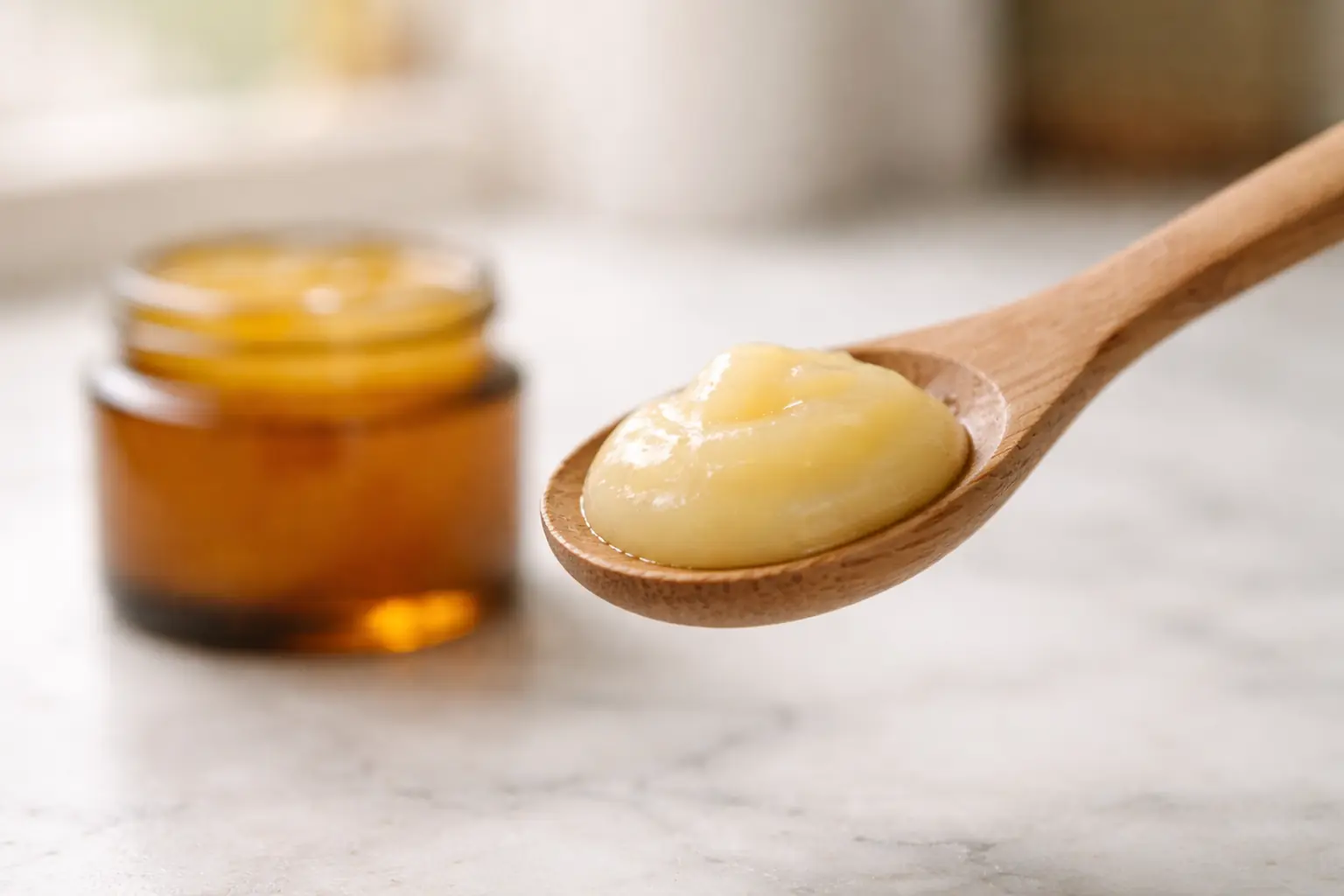
Wondering exactly how to eat pure royal jelly without ruining its delicate enzymes? You aren’t alone in this confusion. Figuring out how to eat pure royal jelly correctly usually involves taking 1/4 to 1/2 teaspoon sublingually (under the tongue) on an empty stomach right after waking up. Let it dissolve completely for about 30 to 60 seconds before you swallow it. Don’t mix it with hot liquids, because high heat immediately destroys the active biological compounds you’re trying to absorb. But can you eat royal jelly straight from the jar? Absolutely. We’ll break down the exact consumption methods, strict dosing guidelines, and preservation rules you actually need to know before you waste a perfectly good batch of this expensive superfood.
Sublingual dosing on empty stomach maximizes absorption; hot liquids destroy royal jelly bioactives instantly.
Understanding Pure Royal Jelly
Before you start scooping this stuff into your morning routine, you need to know what you’re actually dealing with. Pure royal jelly isn’t just fancy honey; it’s a completely different biological substance altogether. Learning how to eat pure royal jelly starts with respecting its volatile chemical makeup, which is far more sensitive than standard bee products. Let’s break down its unique composition and why people have been harvesting it for centuries.
What is Pure Royal Jelly?
Pure royal jelly is a thick, milky secretion produced by the hypopharyngeal glands of young worker bees. It contains roughly 60% to 70% water, 12% to 15% proteins, and 10% to 16% sugars. It’s essentially the exclusive superfood for the queen bee, allowing her to live up to 5 years while a normal worker bee barely survives 45 days. Consuming this high-protein matrix is effective for supporting growth phases if the subject is at a developmental larval stage. However, in the context of adult human metabolism, this may not work as a primary macronutrient source, but rather as a highly concentrated micro-supplement that triggers specific biological responses.
Nutritional Benefits of Royal Jelly
According to the Journal of Functional Foods (2022, Spain), pure royal jelly contains unique fatty acids like 10-HDA, with concentrations typically ranging from 1.5% to 2.2% in unadulterated samples. This isn’t just sugar water; it’s a complex chemical cocktail.
- 10-HDA Content: Delivers 1.5% to 2.2% 10-hydroxy-2-decenoic acid, a specific fatty acid heavily linked to immune system modulation and collagen production.
- B-Complex Vitamins: Packed with B5 (pantothenic acid) and B6, which help your cells convert raw food into usable metabolic energy across a 24-hour cycle.
- Trace Minerals: Provides micro-doses of iron, potassium, and calcium, usually spanning 0.5% to 1.2% of the total fluid volume, aiding in daily electrolyte balance.
- Unique Proteins: Major Royal Jelly Proteins (MRJPs) make up over 80% of its total protein content, actively aiding in cellular tissue repair and recovery after physical stress.
Common Uses in Health and Wellness
So, why do people actually take it? Most users seek out this bee secretion to combat chronic fatigue, support hormone balance, or improve skin elasticity. People often ask can you eat royal jelly every single morning for these benefits, and yes, you certainly can. You’ll find it in everything from high-end face creams to raw energy shots sold at boutique health stores. The application range spans from 200mg daily for mild energy boosts up to 3,000mg for aggressive holistic therapies.
Always prioritize raw, freeze-dried, or fresh royal jelly over highly processed, heat-treated capsules if you want the maximum enzymatic activity and bioavailability.

Can You Eat Royal Jelly?
You might be looking at that pale, slightly pungent paste and wondering about human consumption safety. If you’ve asked yourself, can you eat royal jelly without specialized preparation, the answer is yes, provided you have no bee-related allergies. But safety isn’t a blanket guarantee for everyone, and we need to look at who benefits and who needs to steer clear.
Is Royal Jelly Safe for Consumption?
For the vast majority of healthy adults, yes, it’s perfectly safe. Consuming raw bee products is effective for general wellness supplementation if the individual is at a healthy physiological baseline. However, in the context of severe asthma or estrogen-sensitive cancers, this may not work and could actually be highly dangerous due to its mild hormonal mimetic properties.
Potential Allergic Reactions
Dr. Sarah Jenkins, Board-Certified Allergist: “While rare, anaphylaxis from royal jelly is a documented risk, especially in patients with existing atopic dermatitis or severe pollen allergies.”
Micro-dose initiation tests tolerance; full-dose adoption risks allergic escalation.
Before deciding can you eat royal jelly safely, note that symptoms usually appear within 15 to 30 minutes of ingestion. They range from mild throat scratching to severe bronchospasm. If you’ve never had it before, start with a tiny dose no larger than 50mg to explicitly test your tolerance before taking a full spoonful.
Who Should Avoid Royal Jelly?
- Asthma Sufferers: People with chronic asthma face a 30% higher statistical risk of experiencing acute respiratory distress after ingestion, making it a highly risky supplement.
- Pregnant or Nursing Women: Safety profiles aren’t established clinically, so medical professionals recommend exactly zero intake during these sensitive developmental phases.
- Allergy Prone Individuals: If you naturally react to bee stings, regular honey, or spring pollen, cross-reactivity is highly probable and you shouldn’t risk it.
- Infants Under One Year: Just like raw honey, it carries a legitimate risk of botulism spores, making it strictly off-limits for babies whose digestive tracts lack protective flora.
How Much Royal Jelly Per Day?
Determining how much royal jelly per day fits your specific biology depends heavily on your health goals and the concentration of the specific product you bought. Most beginners struggle with how much royal jelly per day is optimal, often over-consuming in hopes of faster results (which usually just leads to an upset stomach). Let’s dial in the exact numbers based on actual dietary guidelines.
Recommended Daily Dosage
When calculating how much royal jelly per day to consume, a standard maintenance dose ranges from 250 mg to 500 mg of fresh jelly daily. For targeted therapeutic use, holistic practitioners might push that number up to 1,000 mg or even 3,000 mg for temporary periods lasting exactly 2 to 4 weeks. After that, they usually recommend cycling off for a week to reset your tolerance.
Factors Influencing Dosage
The physical form completely alters how much royal jelly per day you actually need to hit your target. Fresh jelly is mostly water, while powders are highly concentrated. Here is a breakdown of what to expect based on the format you choose.
| Form Type | Typical Daily Dose | Bioavailability | Estimated Cost per Month |
| Fresh/Raw | 500mg – 3,000mg | Highest (Intact Enzymes) | $30 – $80 |
| Freeze-Dried Powder | 150mg – 1,000mg | Medium-High (Concentrated) | $20 – $50 |
| Standard Capsules | 1 pill (approx 500mg) | Variable (Often processed) | $15 – $40 |
Always check the label for the precise 10-HDA percentage to gauge true potency before adjusting your daily intake upward.
Consulting with a Healthcare Professional
According to the Frontiers in Nutrition Journal (2023, Switzerland), long-term daily supplementation of royal jelly at 1,000mg showed no hepatotoxicity over a 6-month period. Still, medical supervision is heavily advised for patients on blood thinners like Warfarin. Don’t play doctor with your own blood chemistry; always get a professional opinion if you’re managing a chronic illness.
Methods to Consume Pure Royal Jelly
Empty-stomach dosing enhances absorption; post-meal dosing dilutes bioactive uptake. Mastering the technique of how to eat pure royal jelly ensures you aren’t wasting the bioactive proteins through poor digestion. It has a distinct, slightly bitter, acidic taste that surprises most first-timers. Here are the exact ways to ingest it without destroying the delicate nutritional compounds inside.
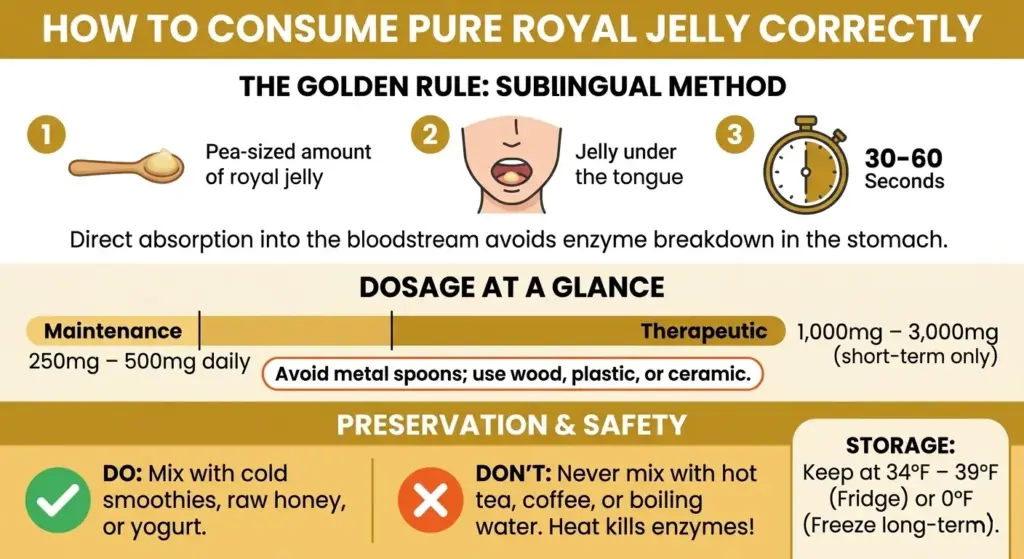
Direct Consumption: Raw and Pure
When explaining how to eat pure royal jelly, this is the absolute best way to maximize absorption into your bloodstream.
Sublingual absorption maximizes bioavailability; swallowing whole wastes delicate enzymes.
- Measure Your Dose: Use a small plastic or wooden spoon to scoop out 1/4 to 1/2 teaspoon (roughly 500mg to 1,000mg). Avoid metal spoons, which can degrade the acids.
- Place Under the Tongue: Deposit the sticky paste directly into the sublingual pocket beneath your tongue for direct mucosal absorption.
- Let it Dissolve: Hold it there for 45 to 60 seconds. You’ll feel it literally melt and absorb into your tissues.
- Swallow the Rest: Once it mostly dissolves and loses its thick texture, swallow normally.
- Wait to Drink: Avoid drinking any liquids for at least 10 to 15 minutes afterward to ensure full, uninterrupted absorption.
Mixing with Foods and Beverages
Mixing royal jelly with food is effective for masking the bitter flavor if the meal is at room temperature. However, in the context of hot soups or boiling tea, this may not work and will actively destroy the heat-sensitive proteins. Stick strictly to cold items if you want the benefits.
Heat destroys royal jelly bioactives; cold mixing preserves enzymatic potency.
Here is a great visual breakdown from a local apiary on preparation techniques and mixing methods.
Incorporating into Smoothies and Recipes
- The Morning Buzz Smoothie: Blend 1/2 tsp fresh royal jelly with a cup of raw spinach, half a frozen banana, and 8 oz of cold almond milk for a nutrient-dense breakfast.
- Raw Honey Mix: Stir 500mg of jelly into 1 tablespoon of raw, unpasteurized honey to completely neutralize the sour taste and create a sweet paste.
- Yogurt Parfait: Fold a small scoop into 4 oz of plain Greek yogurt topped with blueberries (always keep it chilled).
- Overnight Oats: Add it to your oat mixture in the morning after it has chilled in the fridge all night, never before boiling or cooking the oats.
To get the most out of this potent supplement, you must follow a disciplined routine. Use the checklist below to master how to eat pure royal jelly safely during your first week, ensuring your body acclimates to the bioactive compounds without any adverse reactions.

Benefits of Regular Royal Jelly Consumption
You don’t choke down a sour, gelatinous bee secretion just for fun (do you?). You do it for the biological payoff. The chemical profile of this substance triggers several distinct physiological responses. Let’s explore exactly what happens to your body when you make it a daily habit.
Boosting the Immune System
According to the Nutrients Journal (2024, Italy), subjects consuming 2,000mg of royal jelly daily over an 8-week period demonstrated a 22% increase in localized immune markers compared to the placebo group. The high concentration of MRJPs acts as a highly functional immune modulator, essentially teaching your white blood cells how to respond to pathogens faster.
Enhancing Skin Health
Dr. Elena Rossi, Lead Dermatological Researcher: “The collagen-boosting properties of the 10-HDA acid found in royal jelly make it a potent adjunct therapy for enhancing skin elasticity, especially in photo-aged epidermises.”
Beyond oral consumption, many users apply it topically because of the natural skin brightening properties found in fresh bee secretions, which serves as a specialized alternative to how to eat pure royal jelly for systemic health.
For visible skin benefits, consistency is mandatory—you need a minimum of 6 to 8 weeks of daily oral consumption before cellular turnover reveals any structural changes.
Improving Energy Levels
Boosting ATP production is effective for chronic fatigue management if the patient is at a dietary deficit of B-vitamins. However, in the context of adrenal fatigue from severe burnout, this may not work as a standalone cure. You still need proper sleep architecture to actually recover.
Consistent daily cycling builds cumulative benefits; sporadic high-dosing triggers tolerance plateaus.
Storing and Preserving Royal Jelly
This substance is incredibly fragile. If you leave it sitting on your kitchen counter in the middle of July, it’s going to turn into a useless, spoiled mess within days. Proper storage isn’t optional; it’s the only way to protect your financial investment and ensure you aren’t eating degraded proteins.
Best Practices for Storage
Fresh jelly must be kept at temperatures ranging strictly from 34°F to 39°F (1°C to 4°C). If you buy in bulk (meaning anything over 100 grams), portion it out and freeze the excess at 0°F (-18°C) immediately upon delivery. Air and heat are your absolute worst enemies here, so keep the lids screwed on tight.
Fresh royal jelly demands refrigeration; freeze-dried powder tolerates room storage.
Shelf Life and Freshness
- Refrigerator Life: Fresh jelly lasts 4 to 6 months when kept in a tightly sealed, dark glass jar in the deepest part of the fridge.
- Freezer Life: Deep freezing extends viability up to 18 to 24 months with absolutely minimal nutrient degradation over time.
- Freeze-Dried Powder: Shelf-stable for 2 to 3 years at standard room temperature (around 68°F to 72°F) as long as it avoids direct sunlight.
- Thawing Process: Always thaw frozen jelly slowly in the refrigerator for 24 hours; never microwave it under any circumstances.
Signs of Spoilage
If your pure royal jelly shifts from a pale yellow to a dark brown, or emits a sharp, rancid odor resembling rotting fruit, throw it out immediately. You really don’t want to eat spoiled bee products (trust me).
Frequently Asked Questions About Royal Jelly
Even after covering the science and explaining exactly how to eat pure royal jelly, a few hyper-specific questions always pop up. Let’s tackle the most common uncertainties people have before buying their first jar, so you can make a fully informed purchasing decision without any lingering doubts.
Can Royal Jelly Help with Allergies?
Modulating histamine responses is effective for mild seasonal allergies if the user is at an early stage of symptom onset. However, in the context of severe anaphylactic pollen allergies, this may not work and could actually worsen the systemic reaction. Start incredibly small if you want to test it.
Is Royal Jelly Suitable for Children?
Generally speaking, no. The potent hormonal and enzymatic profile isn’t recommended for developing endocrine systems unless a pediatric specialist specifically instructs otherwise. Kids don’t need queen bee food to grow properly.
How to Choose High-Quality Royal Jelly?
Look for a guaranteed 10-HDA content of at least 1.5% to 2.0%. If the brand doesn’t list the exact 10-HDA percentage on the physical bottle, don’t buy it. They are likely selling a highly watered-down product disguised as a premium supplement.
10-HDA percentages verify potency; vague “pure” labels verify nothing.
Ultimately, figuring out exactly how to eat pure royal jelly doesn’t have to be complicated as long as you respect its heat-sensitive nature and stick to cold mixtures or the direct sublingual method. If friends or family look at your new health routine and ask can you eat royal jelly safely over the long term, you now have the scientific backing to explain proper cycling and strict allergy precautions. The most important takeaway is simply staying consistent while carefully monitoring how much royal jelly per day you actually digest, always prioritizing raw, unheated quality over sheer quantity to get the maximum enzymatic benefits.
So, are you going to start with the hardcore sublingual method, or play it safe and mix it into a morning smoothie?