What Is Royal Jelly for Bees
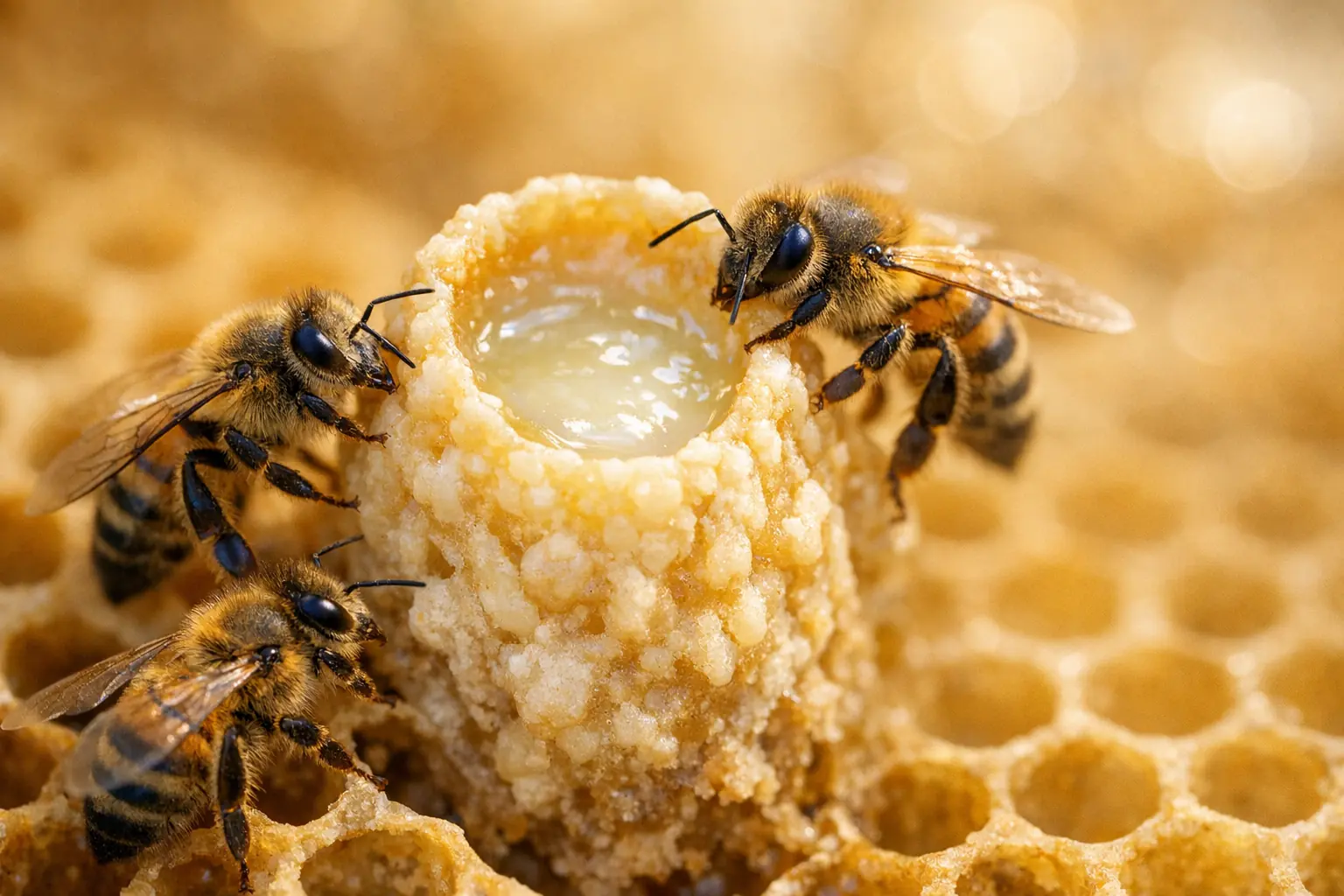
Exactly what is royal jelly for bees? It isn’t just a generic hive byproduct; it’s the exclusive, nutrient-dense glandular secretion that turns an ordinary larva into a queen. Nurse bees produce this white, creamy paste to feed the colony’s youth. While worker bees only get a taste for a few days, the queen consumes it exclusively for her entire life. This dietary restriction triggers epigenetic changes, driving her massive size and reproductive dominance. If you’ve ever wondered how one bee lives years while others die in weeks, this biological superfood holds the answer.
Nurse bees secrete royal jelly from glands; honey bees store floral nectar in combs.
Understanding Royal Jelly: An Overview
Before looking closely at the chemical makeup, you have to grasp the basic timeline of hive nutrition. Nurse bees manufacture this creamy white substance during a very specific window of their lives. It serves as the ultimate biological trigger for the entire colony’s survival.
Composition and Properties of Royal Jelly
Raw royal jelly consists of 60% to 70% water, 12% to 15% proteins, 10% to 16% sugars, and 3% to 6% lipids. The most critical component is 10-hydroxy-2-decenoic acid (10-HDA), a unique fatty acid found nowhere else in nature. This specific acid dictates exactly what is royal jelly for bees good for regarding antimicrobial defense. Freshly harvested jelly usually contains between 1.5% and 2.2% 10-HDA. Drop below that threshold, and the biological potency vanishes. It also packs vitamins B5 and B6, which drive cellular metabolism.
Hypopharyngeal glands synthesize MRJPs; mandibular glands contribute fatty acids like 10-HDA.
How Royal Jelly is Produced by Bees
Only young nurse bees, specifically those aged between 5 and 14 days old, can manufacture this substance. They consume massive amounts of water and pollen, which triggers their hypopharyngeal and mandibular glands. These glands secrete the white paste directly into the brood cells. If a nurse bee gets older than 15 days, her glands shrink. She then transitions to foraging duties, losing the ability to synthesize the jelly entirely.
The Role of Royal Jelly in a Bee Colony
This paste acts as the master genetic switch of the hive. It dictates caste determination. Two larvae can have identical DNA, but their diet decides their fate. This explains what is royal jelly for bees at a molecular level. The larva floating in a heavy pool of this secretion develops ovaries and a stinger, while the larva fed a diluted diet becomes a sterile worker.
To truly understand the biological mechanics at play, it is essential to see how colony development is triggered. This video explains in detail what is royal jelly for bees and how this substance acts as a master genetic switch, transforming a standard larva into a queen.
Always maintain a strong population of nurse bees aged 5-14 days; without them, the colony cannot produce enough glandular secretions to rear a healthy replacement queen.
What is Royal Jelly for Bees Used For
People often wonder exactly what is royal jelly for bees used for when observing a bustling hive. It dictates the entire caste system and lifespan of the colony. The substance acts as a genetic switch, determining who does the heavy lifting and who lays the eggs.
Nurturing the Queen Bee
The queen’s physiology relies entirely on her specialized diet. She consumes roughly 2 to 3 milligrams of jelly daily. This fuel allows her to lay between 1,500 and 2,000 eggs every single day during peak spring flow.
- Nurse bees construct a larger, peanut-shaped queen cup.
- The existing queen deposits a fertilized egg inside.
- Nurse bees flood the cup with pure, undiluted glandular secretions.
- The larva consumes the paste continuously for 5.5 to 6 days.
- Workers cap the cell, allowing the well-fed pupa to metamorphose.
Development and Growth of Bee Larvae
Even standard worker larvae need an initial boost. You can’t understand what is royal jelly for bees without looking at early brood development.
- Initial Feeding: All larvae get a pure diet for the first 36 to 72 hours.
- Rapid Expansion: Larval weight increases by 1,000 to 1,500 times in just five days.
- Dietary Shift: After day three, workers receive “worker jelly,” a mixture diluted with pollen and honey.
- Immune Priming: The antimicrobial peptides in the early diet protect vulnerable larvae from bacterial rot.
Influence on Bee Longevity and Health
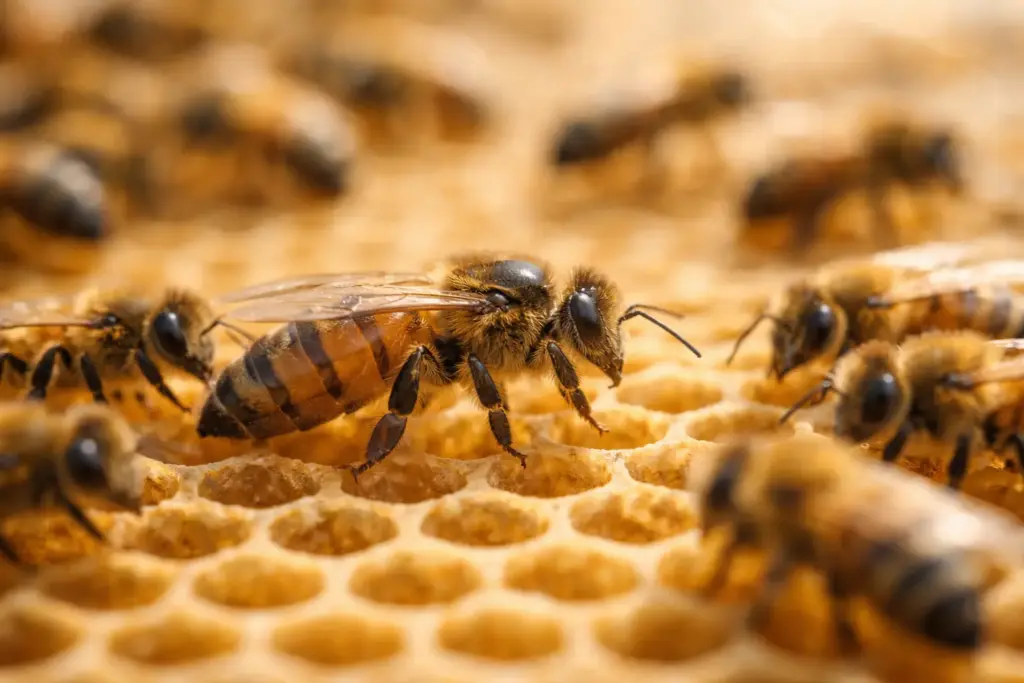
Dietary input directly alters insect lifespans. A worker bee burns out in 4 to 6 weeks. A queen, eating the exact same base proteins but highly concentrated, lives 3 to 5 years. That perfectly illustrates what is royal jelly for bees used for in terms of longevity. According to the Agricultural University of Athens (Greece, 2021), queen bees sustained on diets with 10-HDA concentrations above 1.8% showed a 40% increase in active laying months compared to those fed degraded reserves.
10-HDA concentration triggers epigenetic caste differentiation; low potency yields sterile workers.
What is Royal Jelly for Bees Good For
Moving past basic survival, you might ask what is royal jelly for bees good for regarding peak performance. This superfood provides immense physiological benefits that keep the colony resilient against diseases and environmental stressors. It’s the ultimate natural defense mechanism.
Nutritional Benefits of Royal Jelly
The density of amino acids in this paste supports rapid tissue growth. It contains nine major royal jelly proteins (MRJPs), which make up 80% to 90% of the total protein content. These MRJPs are exactly what is royal jelly for bees from a nutritional standpoint. They drive cell proliferation.
“The epigenetic power of MRJP1 is staggering. It literally alters DNA methylation patterns, transforming a short-lived worker into a long-lived reproductive engine.” — Dr. Marla Spivak, Distinguished McKnight University Professor.
Medicinal Properties and Uses
Inside the dark, humid environment of a hive, pathogens thrive. The colony uses this paste as a chemical shield. This highlights what is royal jelly for bees used for defensively.
- Bacterial Resistance: Royalisin, a potent peptide, destroys the cell walls of competing bacteria.
- Fungal Control: The acidic pH (usually between 3.6 and 4.2) creates a hostile environment for chalkbrood.
- Viral Suppression: Specific fatty acids interrupt viral replication inside larval digestive tracts.
- Gut Health: The secretion lines the larval midgut, promoting beneficial microbiome growth.
Royal jelly defends against pathogens; honey fuels winter colony survival.
Impact on Bee Colony Productivity
A hive with abundant glandular secretions builds comb faster and stores more honey. Healthy nurse bees create healthier foragers. This perfectly defines what is royal jelly for bees in a commercial setting. Colonies lacking protein pollen patties produce up to 30% less jelly, leading to stunted workers who carry lighter nectar loads.
Provide colonies with pollen substitute containing at least 15% crude protein during early spring dearths to ensure maximum glandular secretion production.
What is Royal Jelly for Bees in USA
The domestic market operates under completely different constraints than international suppliers. If you want to know what is royal jelly for bees in USA, you have to look at strict agricultural standards, localized harvesting limitations, and a high-demand supplement industry.
Production and Harvesting Practices
Domestic production is incredibly low. Because labor costs hover between $15 and $25 an hour, paying workers to graft thousands of queen cups isn’t profitable.
That explains what is royal jelly for bees in USA contexts—it’s mostly an imported commodity. According to UC Davis (California, 2022), commercial domestic apiaries that attempted high-volume extraction saw a 22% increase in hive mortality due to chronic nurse bee exhaustion. If you want to master the delicate art of harvesting this glandular substance, follow our guide on how this bee superfood is created.
Ready to start harvesting? Ensuring your colony is strong enough is vital. Use this professional checklist to verify your hive’s readiness and maintain sustainable production standards.
Regulations and Standards
The FDA strictly regulates how companies market these hive products. You cannot legally claim it cures diseases. When asking what is royal jelly for bees in USA regulations, it falls under dietary supplements. Quality control labs test shipments for chloramphenicol and other banned antibiotics. Lots testing above 0.3 parts per billion are immediately destroyed at the border.
Fresh royal jelly spoils in days; freeze-dried powder survives months at room temperature.
Market Trends and Consumer Demand
American consumers buy this product mostly in freeze-dried capsule form. Retail prices range from $15 to $45 per bottle, depending on 10-HDA concentration. Understanding what is royal jelly for bees in USA markets requires looking at the wellness sector. Buyers want raw, organic paste, but maintaining the cold chain (shipping it at 0°F to 5°F) pushes retail prices up to $50 to $120 per ounce. This high cost restricts the market to niche health enthusiasts.
Comparing Royal Jelly with Other Bee Products
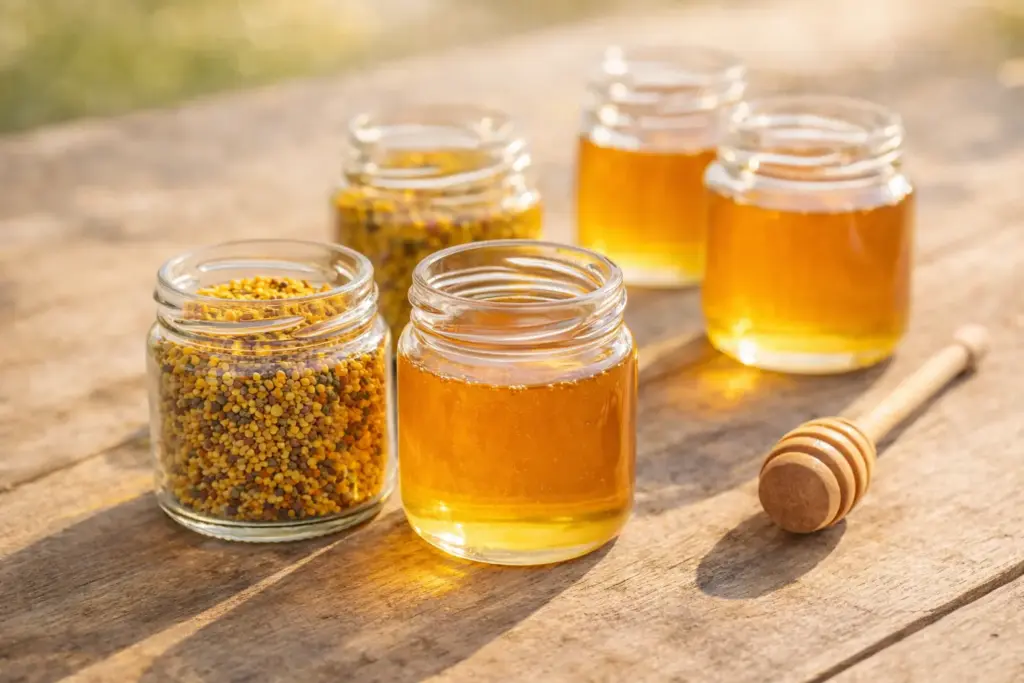
Don’t confuse this specialized secretion with common hive staples like honey or pollen. Each product serves a distinct biological purpose with completely different chemical profiles, harvest volumes, and shelf lives. The differences are massive.
Royal Jelly vs. Honey
Honey provides carbohydrates; the white paste provides building blocks. You can’t grasp what is royal jelly for bees without comparing it to nectar. Nectar is gathered from flowers, while the paste is synthesized internally.
Here is a quick breakdown of how these two substances differ.
| Feature | Honey | Royal Jelly |
| Primary Source | Plant Nectar | Nurse Bee Glands |
| Water Content | 16% – 18% | 60% – 70% |
| Primary Function | Winter Energy Fuel | Queen/Larval Development |
| Shelf Life (Room Temp) | Decades | 3 to 5 Days (Spoils quickly) |
Knowing these differences prevents beekeepers from mishandling their harvests.
Royal Jelly vs. Bee Pollen
Pollen is the raw material; the paste is the refined product. Nurse bees must eat pollen to grow their hypopharyngeal glands.
- Collection: Foragers scrape pollen off flowers into baskets on their hind legs.
- Processing: Bees pack it into cells with lactic acid bacteria to create “bee bread.”
- Usage: Nurse bees digest this bee bread over 48 to 72 hours.
- Output: The digestion process fuels the glands, resulting in the creamy secretion.This chain of events shows exactly what is royal jelly for bees used for during the pollen digestion cycle.
Unique Benefits of Each Product
Propolis seals the hive, honey provides fuel, and pollen gives raw protein. But the glandular secretion acts as the hive’s hormones. This is what is royal jelly for bees good for—it drives the physiological destiny of the colony.
Never mix raw royal jelly into hot tea or boiling water; temperatures exceeding 120°F instantly denature the bioactive MRJP proteins, rendering them useless.
Human Uses of Royal Jelly: Beyond the Hive
Humans have tried to capture the queen bee’s longevity for centuries, turning this hive resource into a premium supplement. From skincare routines to dietary capsules, the commercial applications are broad, though they require careful dosage and realistic expectations.
Traditional and Modern Uses
Historically, traditional medicine practitioners used the paste to treat asthma and fatigue. Today, it sits on pharmacy shelves. If you ask a holistic practitioner what is royal jelly for bees, they will point to its historical use as a vitality tonic. Dosages usually range from 500 to 3,000 milligrams per day. Fresh paste tastes highly acidic and slightly bitter (yes, really), so modern users prefer swallowing freeze-dried powder in gelatin capsules.
Health Supplements and Cosmetics
The beauty industry loves this ingredient. Anti-aging creams incorporate the proteins to stimulate collagen production. This is what is royal jelly for bees good for in human dermatology.
“The moisturizing capacity of 10-HDA allows it to penetrate the epidermis efficiently, acting as a natural humectant that traps water in human skin cells.” — Dr. Ryszard Maleszka, Professor of Molecular Genetics.
Scientific Studies and Research
Modern science demands measurable data. Researchers continually investigate what is royal jelly for bees used for in clinical settings. According to Tamagawa University (Tokyo, Japan, 2023), freeze-dried samples stored at 70°F lost 45% of their 10-HDA potency within six months, whereas frozen samples retained 98% of their bioactivity. Supplemental feeding is effective for commercial apiaries if the project is at the early spring build-up stage. However, in the context of late-season winter preparation, this may not work.
Sustainability and Ethical Considerations
Extracting this precious resource isn’t without environmental costs. Ethical beekeepers must balance commercial demand with the biological needs of the colony, ensuring that harvesting practices don’t compromise the hive’s long-term survival and genetic strength.
Impact of Royal Jelly Harvesting on Bee Populations
Intensive farming stresses the colony. To harvest the paste, beekeepers must constantly remove the queen, forcing the hive into a state of panic. They build emergency queen cells, which humans then empty. This aggressive cycle highlights what is royal jelly for bees in USA sustainability debates. A colony constantly robbed of its brood food cannot raise healthy foragers. Their foraging population drops by 20% to 40%.
Ethical Beekeeping Practices
Responsible apiculture limits extraction. You can’t repeatedly drain a colony and expect it to survive winter.
- Limited Grafting: Ethical farms graft a maximum of 30 to 45 cells per hive per week.
- Rest Periods: Colonies get a full three-week break between extraction cycles.
- Nutritional Support: Beekeepers feed heavy syrup (2:1 ratio) during extraction to reduce foraging stress.
- Queen Replacement: Hives used for extraction get fresh, genetically vigorous queens every 8 to 12 months.Following these steps ensures that what is royal jelly for bees remains a renewable, safe resource.
Ethical harvesting limits cell extraction; intensive farming exhausts nurse bee populations.
Ensuring the Future of Bees
We can’t treat bees like automated factories. We must protect their natural cycles. If we understand what is royal jelly for bees, we know it belongs primarily to the hive. Supporting local beekeepers who prioritize bee health over maximum yield ensures the insects keep thriving. This is exactly what is royal jelly for bees good for—keeping the natural pollination cycle intact for generations.
FAQ
Does royal jelly actually cure human diseases?
No, unless you count alleviating minor skin irritations; the FDA prohibits any definitive medical claims regarding disease reversal or treatment.
Can anyone harvest royal jelly from a backyard hive?
Yes, but you need specialized grafting tools, microscopic precision, and a willingness to intentionally make your hive queenless, which severely stresses the colony.
Will eating royal jelly make me allergic if I react to bee stings?
Yes, but the reaction varies; people with severe pollen or bee venom allergies risk anaphylaxis when ingesting any concentrated hive products.
Is freeze-dried royal jelly as good as the fresh, raw paste?
No, unless it was lyophilized immediately after harvest and stored below 40°F, as room-temperature processing destroys the fragile MRJP proteins.
Do worker bees ever eat royal jelly after their first three days?
No, unless the colony enters a severe nutritional crisis where nurse bees cannibalize eggs, but generally, adult workers lack the biology to digest pure jelly efficiently.
So, are you ready to look at your local apiary with a completely new perspective on hive nutrition?
Sources
- Effects of 10-HDA Concentrations on Queen Bee Longevity and Reproductive Output — Agricultural University of Athens (Athens, Greece, 2021).
- Hive Stress Metrics and Mortality Rates in High-Volume Commercial Royal Jelly Extraction Apiaries — UC Davis (Davis, California, 2022).
- Stability and Degradation Rates of 10-Hydroxy-2-decenoic Acid (10-HDA) in Lyophilized Supplements — Tamagawa University (Tokyo, Japan, 2023).
- The Epigenetic Power of MRJP1 (Royalactin) — Dr. Marla Spivak, Distinguished McKnight University Professor. (Research via Nature).
- Molecular Genetics of Royal Jelly Proteins and Epidermis Regeneration — Dr. Ryszard Maleszka, Professor of Molecular Genetics. (Research via PubMed/Molecular Biology Reports).