How is Royal Jelly Made
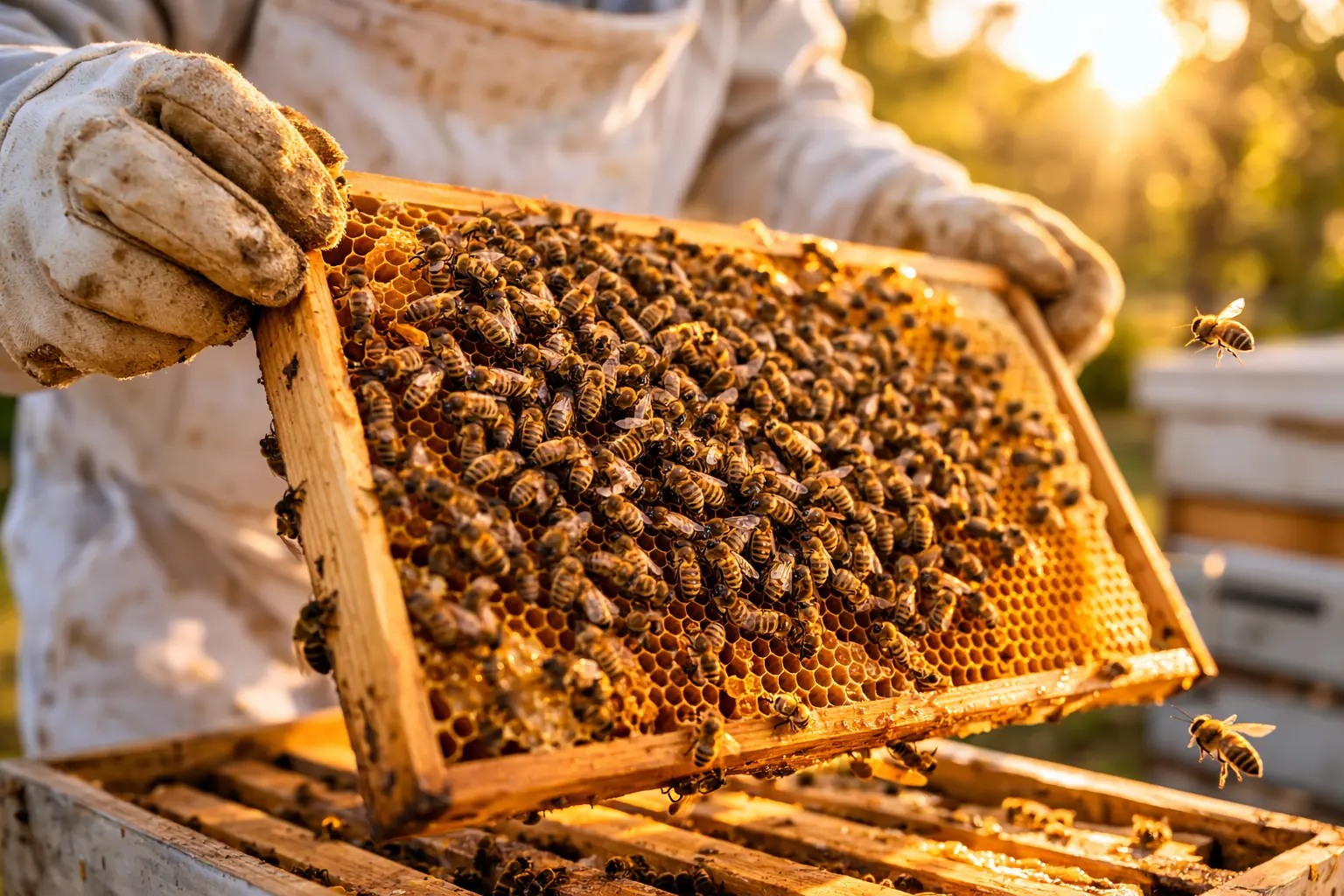
You’ve probably seen jars and capsules online, but the real question is sharper: how is royal jelly made, and what actually happens inside the hive before it reaches a spoon or supplement bottle? If you don’t know the difference between nurse bee secretion, queen cells, and storage handling, it’s easy to overpay for weak or poorly kept product. This protein-rich substance is incredibly delicate, requiring precise handling to maintain its bioactivity. A lot of confusion starts because people mix up honey production with royal jelly production, even though the process, the bee roles, and the harvesting method are completely different.
Nurse bees secrete royal jelly from glands; honey bees store nectar in combs.
Understanding Royal Jelly: An Overview
Before getting into hive management and harvesting, it helps to know what royal jelly is and why bees make it at all. This section covers the substance itself, the claims around its benefits, and the long history that made people curious about it in the first place.
Curious about the commercial process? This video shows exactly how is royal jelly made from bees, highlighting the intense hive management required before it ever reaches a jar.
What is Royal Jelly?
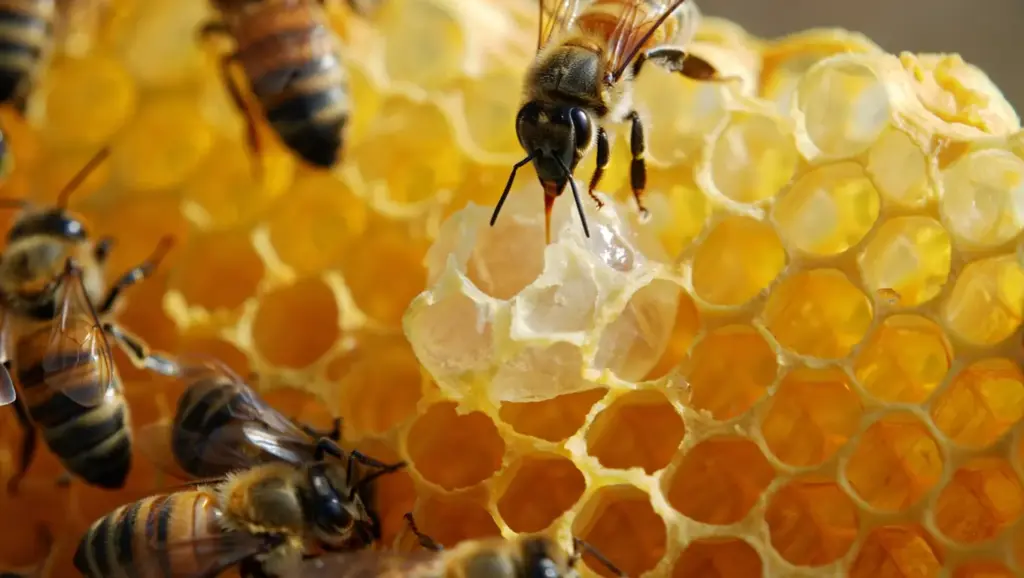
Royal jelly is a creamy, protein-rich secretion produced by young worker bees, often called nurse bees. It isn’t honey, and it isn’t pollen paste. It comes mainly from the hypopharyngeal and mandibular glands in worker bees and is fed to all larvae briefly, while future queens receive it in larger amounts for longer periods. That feeding difference is a major part of the answer to how is royal jelly made from bees: the bees secrete it as brood food, not as a stored sweetener.
If a label blurs the line between honey and royal jelly, slow down. Real royal jelly comes from nurse bee glands and is harvested from queen cells, so clear sourcing matters more than flashy packaging.
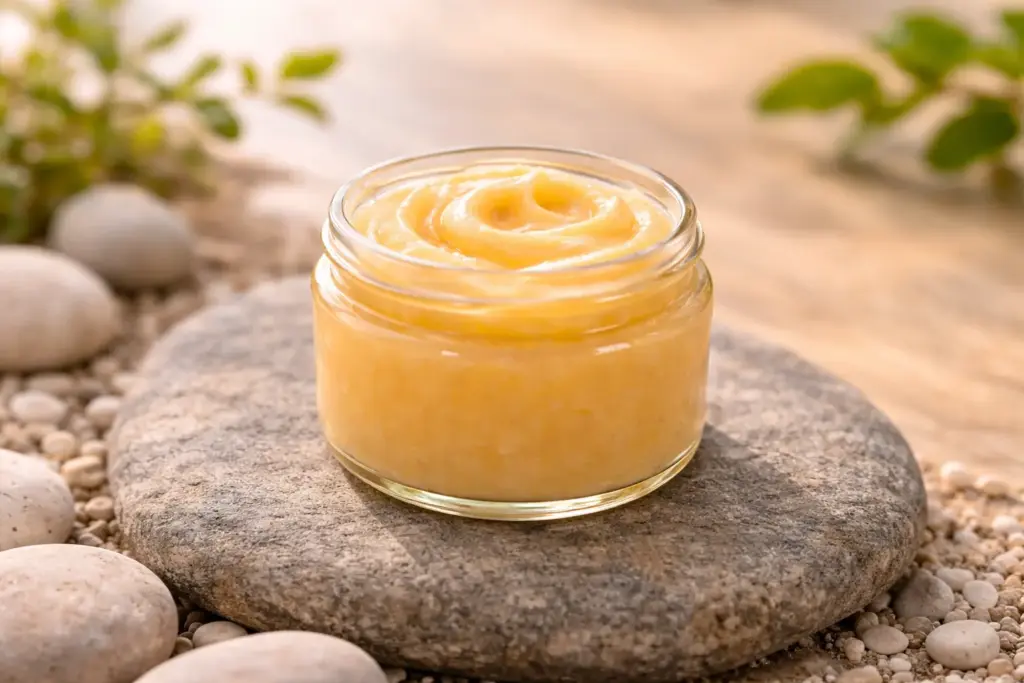
- Texture: Fresh royal jelly is thick, milky, and slightly gelatinous rather than syrupy like honey.
- Origin: It is secreted by worker bees, not gathered directly from flowers.
- Purpose in the hive: Bees produce it primarily to nourish larvae, especially developing queens.
Benefits of Royal Jelly
People usually buy royal jelly for wellness support, skin care, or traditional tonic use, though the strength of evidence varies by claim. While some lab and animal research on this hive product looks promising, human outcomes are less tidy. A 2024 systematic review in Heliyon noted that royal jelly contains bioactive compounds such as major royal jelly proteins and unique fatty acids, while also stressing that composition varies by geography and botanical conditions. That variability is why product quality can swing from batch to batch.
So, when people ask how is royal jelly made, they’re often really asking something bigger: how much does the production process affect purity and usefulness? Quite a lot, actually.
Many beginners, when trying this product for the first time, often wonder about its flavor profile before becoming accustomed to its specific organoleptic properties.
Historical Uses of Royal Jelly
Royal jelly has been used for decades in traditional food and health cultures, especially across parts of Asia and Europe. The fascination comes from the queen bee story—same genetics, different diet, wildly different outcome. Britannica describes royal jelly as the thick, white substance fed to bee larvae, especially future queens, which helped cement its reputation in popular health culture. That reputation grew fast; the science has moved more cautiously.
“The scientific beekeeper doesn’t want to just be told how to do it, but to understand the reasons why.” – Randy Oliver, biologist and author, ScientificBeekeeping.com
The Role of Bees in Royal Jelly Production
Now we can move from the substance to the insects doing the work. Royal jelly production depends on age-based labor inside the colony, the biology of larvae, and the colony’s response to queen-rearing conditions.
The Life Cycle of Bees
Honey bee colonies run on timing. Young workers spend their early adult days cleaning cells and then shift into nursing duties, which is when they secrete brood food. That age window matters because how is royal jelly made step by step begins with having enough young nurse bees in active brood condition. Without a sufficient population of these young workers, the production of the glandular food drops significantly.
In practice, a productive colony needs strong brood turnover, access to pollen or pollen substitute, and a stable environment. Weak colonies don’t produce much royal jelly. They simply can’t spare the nursing effort.
Specific Bee Types Involved
Not every bee in the hive contributes the same way. Nurse bees do the secretion. Foragers bring in nectar, pollen, water, and resins that support the colony’s nutrition. The queen lays eggs but does not make royal jelly herself. If you want the plain answer to how is royal jelly made from bees, it starts with worker bees in nursing age, supported by the rest of the colony.
| Main job | Feed larvae and secrete royal jelly | Collect nectar, pollen, and water |
| Age range | Usually younger adult workers | Usually older adult workers |
| Direct role in royal jelly | Primary producers | Indirect nutritional support |
The result is pretty clear: nurse bees are the direct source, while foragers make the colony capable of sustaining production.
The Importance of the Queen Bee
The queen matters even when she isn’t the one producing the substance. Her pheromones regulate colony behavior, and queen-rearing techniques used by beekeepers are designed around that biology. When colonies sense queen-rearing conditions, workers lavish selected larvae with extra jelly. As Britannica notes, if normal queen signaling fails, workers begin constructing special brood cells associated with queen development. That response is a big part of commercial production logic.
- Queen presence shapes behavior: Colony organization and brood patterns change when the queen is present, absent, or restricted.
- Queen-rearing triggers excess feeding: Selected larvae in queen cups receive abundant jelly.
- Production is behavioral, not mechanical: Bees must be induced into a queen-rearing mode for higher yields.
How is Royal Jelly Made from Bees
This is the heart of the topic. To understand how is royal jelly made from bees, you have to picture thousands of nurse bees converting nutrition from the colony into larval food, then concentrating that effort inside queen cells where beekeepers can later collect it.
To truly understand hive biology, watch this visual guide on how is royal jelly made step by step. It perfectly illustrates the moment nurse bees feed the queen cells.
The Worker Bees” Role
Worker bees around 5 to 15 days old are typically the main producers because their food glands are active then. They consume pollen and other nutrients, and their glands secrete the whitish substance used to feed brood. A 2024 study in Scientific Reports found that pollen diet significantly affected hypopharyngeal gland development and gene expression linked to royal jelly biosynthesis in honey bees. That’s a neat reminder that feed quality upstream changes jelly quality downstream.
Pollen-rich nutrition boosts gland development; nutrient-deficient colonies produce weaker jelly.
The Secretion Process
The secretion process is biological and fast. Nurse bees digest and process nutrient-rich food, then release glandular secretions into brood cells. For future queens, that feeding stays heavy and sustained. This is why how is royal jelly made isn’t answered by “bees make it” alone; they make it under specific brood-feeding conditions, with age, nutrition, and colony status all shaping the result.
The quality of this nutrient-dense secretion also varies; a 2024 Foods study reported that feed supplements influenced the nutritional profile and sugar content. A 2024 Foods study reported that feed supplements influenced the nutritional composition and quality assessment of royal jelly samples, including differences in sugar profiles. So yes, production method and feeding practice can leave fingerprints on the final product.
Collection from Queen Cells
Commercial collection usually happens from artificial or managed queen cells after young larvae have been heavily fed for a short period, often around 68 to 72 hours after grafting. Beekeepers remove the larvae first, then scoop or suction out the jelly. Queen-cell harvesting yields pure royal jelly; honey extraction yields carbohydrate syrup. That’s the practical end of how is royal jelly made step by step: induce queen-cell feeding, wait for accumulation, and harvest before the cell progresses too far.
“A patch of newly-emerging larvae will produce the pheromones that attract the nurse bees to the queen cells, and stimulate the nurses to produce abundant royal jelly.” – Randy Oliver, biologist and beekeeper, Queens for Pennies
How is Royal Jelly Made Step by Step
Here’s the production sequence people usually mean when they search how is royal jelly made step by step. The details vary by beekeeper and climate, but the core flow stays fairly consistent: prepare a strong colony, trigger queen-rearing behavior, harvest on schedule, and protect the jelly from heat and degradation.
Step 1: Preparing the Hive
The colony must be strong, brood-rich, and full of young workers. Beekeepers often select hives with dense populations, good pollen intake, and calm disease-free behavior. Frames, queen cups, grafting tools, and collection containers are prepared before the cycle begins. If the hive is weak, the rest of the process gets shaky fast.
If you are wondering how is royal jelly made step by step, using a professional checklist is essential. This tool ensures your hive is in the optimal condition for high-quality production.
Step 2: Stimulating Royal Jelly Production
Beekeepers encourage nurse bees to feed selected larvae as potential queens. That usually involves grafting very young larvae into queen cups and placing them in a cell-builder colony arranged to respond strongly. The colony then floods those cups with royal jelly. That is the central mechanism behind how is royal jelly made from bees in managed production.
Grafted larvae trigger queen-rearing behavior; natural brood cycles yield minimal surplus jelly.
Step 3: Harvesting Royal Jelly
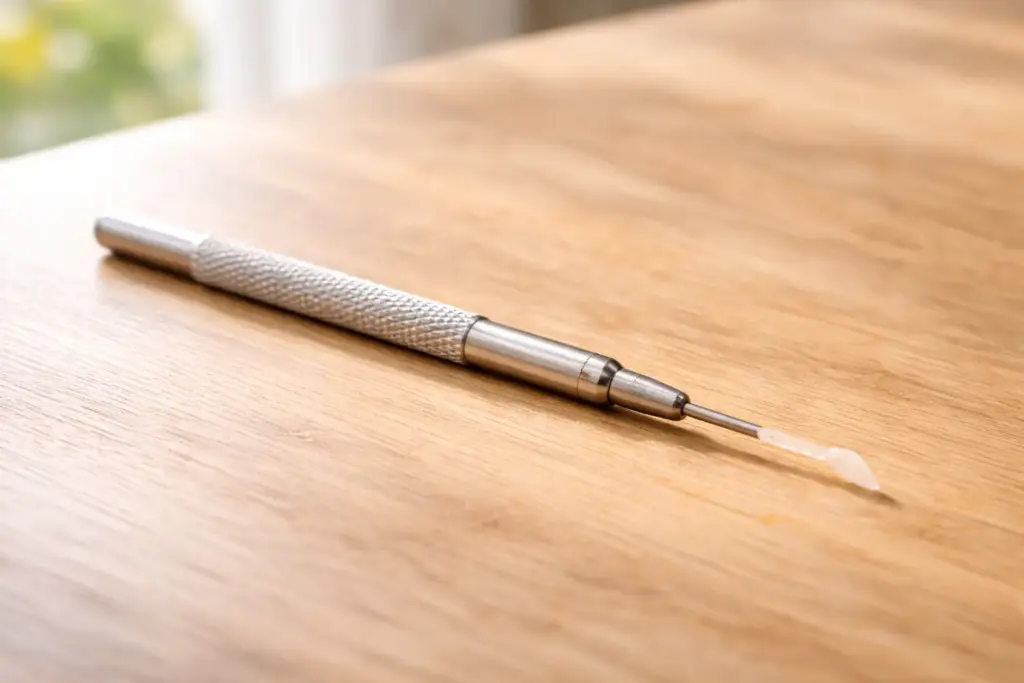
Timing matters more than brute force. The jelly is generally collected after enough has accumulated but before larval development advances too far. Larvae are removed carefully, and the jelly is lifted out with a small spatula, suction device, or specialized tool under clean conditions.
- Select a strong colony. Beekeepers choose a hive with abundant nurse bees, brood, and feed stores. Without that foundation, production falls off quickly.
- Insert grafted larvae into queen cups. Very young larvae are transferred into prepared cups so the colony treats them as future queens. This triggers rich feeding behavior.
- Wait for the feeding window. The colony deposits royal jelly into the cups over roughly three days. During this period, stable temperature and low disturbance help.
- Remove larvae and collect the jelly. Each cup is opened, the larva is lifted out, and the jelly is harvested with clean tools. Careless handling can contaminate the batch.
- Chill and store immediately. Fresh royal jelly is perishable, so it is cooled or frozen soon after harvest. That step protects texture and bioactive compounds.
Step 4: Storing Royal Jelly
While most consumers are unaware of the complex labor behind this bee-derived ingredient, freshness and processing methods significantly influence its efficacy in creams and serums. Some products are freeze-dried to improve shelf stability, though fresh and lyophilized forms aren’t identical in handling or texture.
If storage is sloppy, production quality won’t save the product. Fresh royal jelly should move quickly into cold storage, or its value starts slipping almost immediately.
Unique Aspects of Royal Jelly Production
Royal jelly production looks simple from the outside, but it’s unusually sensitive. Weather, forage, ethics, and modern equipment all change how is royal jelly made and how consistent the final batch turns out.
Environmental Factors
Temperature, humidity, forage diversity, and colony movement all matter. Migratory beekeeping can expose colonies to different bloom periods, which may shift composition. A 2022 study published in Food Research International reported that royal jelly produced during different floral periods showed changes in chemical composition and antioxidant activity during migratory beekeeping. That means two jars can both be real royal jelly and still differ in measurable ways.
- Forage quality: Better pollen sources support stronger gland development in nurse bees.
- Season: Spring and early strong-flow periods often support heavier brood activity.
- Climate stress: Excess heat or unstable weather can reduce colony performance.
Migratory beekeeping shifts floral composition; stationary hives offer more consistent chemical profiles.
Ethical Considerations
Some buyers care less about volume and more about bee welfare. Fair point. Royal jelly production asks the colony to pour labor into queen-cell feeding, so management style matters. Overworked, underfed, or heavily stressed colonies may still produce something, but the tradeoff is obvious. Your mileage may vary by beekeeper, yet transparent husbandry is usually a better sign than vague “premium” language.
Ethical colony management prioritizes bee welfare; intensive harvesting maximizes short-term yield.
Technological Advancements
Modern beekeepers use better grafting tools, cleaner collection systems, and tighter cold-chain handling than many small operators used years ago. Some also track yield, feeding patterns, and colony strength more carefully. The catch? Technology helps consistency, but it doesn’t replace bee biology. If the colony isn’t right, gadgets won’t rescue the batch.
Applications and Uses of Royal Jelly
People don’t ask how is royal jelly made just out of curiosity. Usually they want to know whether the effort behind it connects to real-world uses. It does—but the use case changes how you should judge freshness, purity, and form.
In Health and Wellness
Royal jelly is sold in fresh, frozen, capsule, and freeze-dried forms for general wellness support. Freeze-drying extends shelf stability; fresh royal jelly preserves native enzymatic activity. Some consumers use it as a daily supplement, though claims often outrun the evidence. The strongest practical advice is simple: buy cautiously if you have a history of asthma, atopy, or bee-product allergy. NCBI’s LiverTox notes that royal jelly is generally tolerated but can trigger rare hypersensitivity reactions, including severe ones, especially in susceptible people.
In Cosmetics
In skin-care products, royal jelly is valued more for branding and emollient positioning than for a single miracle effect. Creams and serums often use small amounts alongside humectants and oils. Most people won’t know how is royal jelly made from bees before buying a cosmetic, but production quality still matters because freshness and processing influence ingredient integrity.
- Face creams: Often marketed for softness and skin conditioning rather than dramatic clinical change.
- Serums: Usually combine royal jelly with glycerin, peptides, or botanical extracts.
- Masks and balms: These products lean on texture and moisture support more than on strong medical claims.
In Traditional Medicine
Traditional systems have used royal jelly as a tonic, restorative food, or age-support ingredient for years. That cultural history is real, but it shouldn’t erase safety questions. Case reports and reviews in the medical literature document that allergic reactions, including anaphylaxis, can occur after ingestion in some people. So the old reputation and the modern risk conversation need to sit side by side.
Frequently Asked Questions About Royal Jelly
This section answers the practical questions that usually come right after people learn how is royal jelly made. Safety, storage, and purity are where buyers make the biggest mistakes, so clear answers help.
Is Royal Jelly Safe to Consume?
Royal jelly is often safe for many adults, but not for everyone. People with asthma, bee-product allergies, or strong atopic histories should be especially careful because rare but serious allergic reactions have been reported in medical literature and safety reviews. If you’re unsure, talk with a clinician before trying it.
How to Store Royal Jelly
Fresh royal jelly should be kept cold—refrigerated for short-term use and frozen for longer storage. Light and heat are the enemies here. If a seller treats storage like an afterthought, that’s a red flag, no matter how convincing the label sounds.
How to Identify Pure Royal Jelly
Look for clear sourcing, harvest or packaging details, storage instructions, and minimal ingredient lists. Pure product should not be confused with honey blends unless the label says so plainly. And if you’re asking how is royal jelly made step by step because you want the cleanest form, fresh or properly frozen royal jelly is usually the reference point buyers compare everything else against.
- Read the ingredient panel: Pure royal jelly should be easy to spot, without a long filler list.
- Check storage language: Serious sellers mention refrigeration, freezing, or freeze-drying clearly.
- Ask about harvest method: Honest producers can usually explain queen-cell collection and handling.
Pure royal jelly lists single ingredient; honey blends obscure royal jelly concentration.
Conclusion: Mastering the Art of Royal Jelly Production
Understanding how is royal jelly made is much more than just a lesson in apiculture—it is a study of how biology, timing, and colony health intersect to create a premium, nutrient-dense substance. While the journey of how is royal jelly made from bees involves complex glandular processes and specific behavioral triggers within the hive, the commercial application relies on the beekeeper’s ability to maintain high-quality standards through every stage.
By following the systematic approach of how is royal jelly made step by step, producers can ensure that the final product retains its integrity, bioactive properties, and purity. Whether you are a curious consumer or an aspiring beekeeper, remember that the true value of this harvest lies in the dedication to bee welfare and the strict adherence to cold-chain storage. With the right techniques and a deep respect for the hive, the production of this legendary bee secretion can be as rewarding as it is precise.
Have you ever compared fresh royal jelly with freeze-dried capsules or honey blends? The differences can be surprisingly obvious—share what you noticed, especially if storage or taste changed your opinion.
Sources
- Royal jelly a promising therapeutic intervention and functional food supplement: A systematic review — Heliyon, 2024
- Mechanistic exploration of royal jelly production in caged honey bees (Apis mellifera) — Scientific Reports, 2024
- Nutrient Composition and Quality Assessment of Royal Jelly Samples Relative to Feed Supplements — Foods, 2024
- Changes in chemical composition and antioxidant activity of royal jelly produced at different floral periods during migratory beekeeping — Food Research International, 2022
- Royal Jelly – LiverTox — NCBI Bookshelf, 2022
- A Case of Anaphylaxis Caused by Major Royal Jelly Protein 3 of Royal Jelly and Its Cross-Reactivity with Honeycomb — 2022
- The Varroa Problem: Part 7- Walking the Walk — Randy Oliver
- Queens for Pennies — Randy Oliver