Discover the Benefits of Fresh Royal Jelly Made in USA
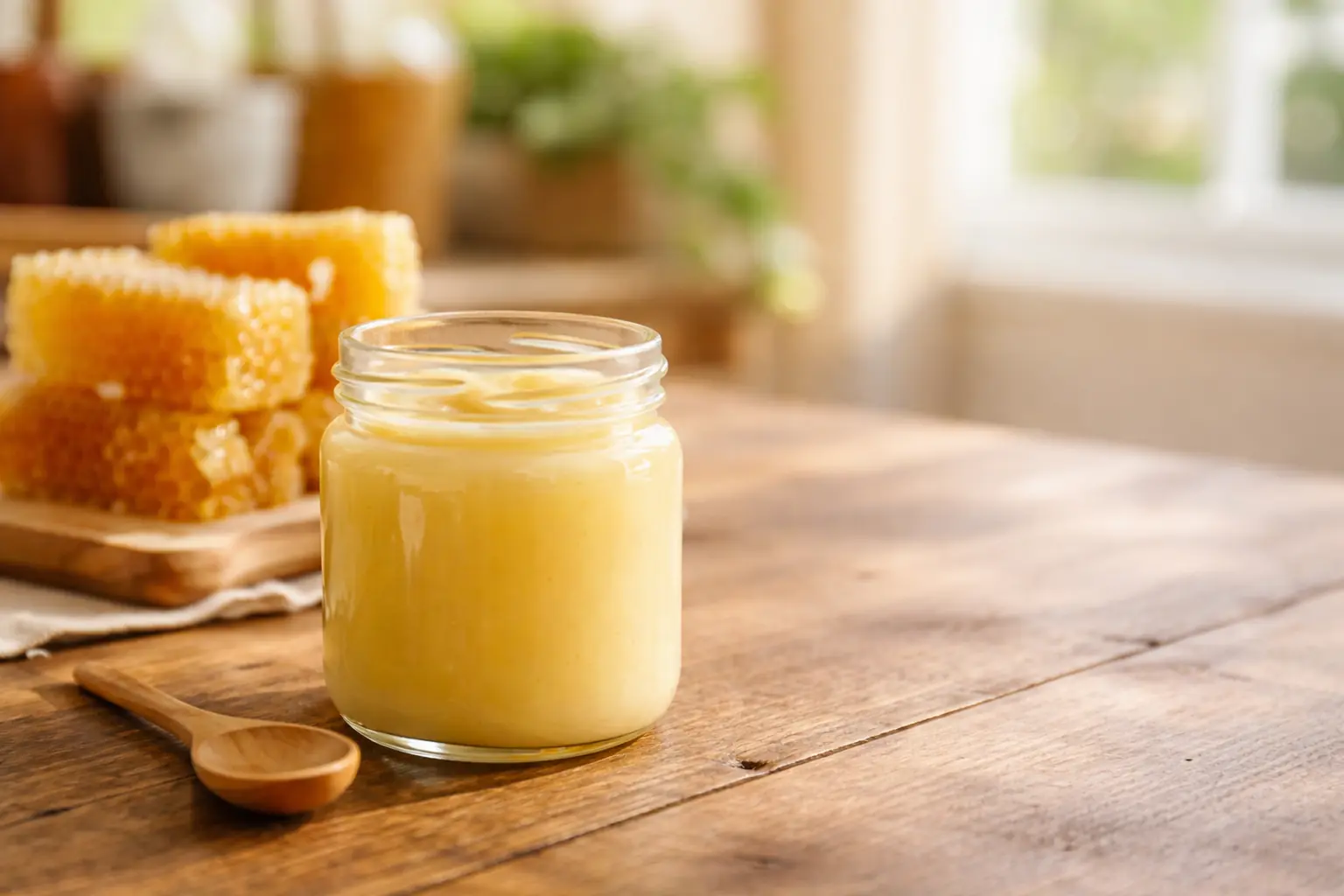
Looking for fresh royal jelly made in USA? You’re trying to avoid wasting money on weak, diluted bee products—and you want product that’s actually handled like a cold, fragile food (because it is). In 2026, the risk isn’t just “overpaying”; it’s buying a jar that’s been warm-shipped, relabeled, or processed until the best parts are basically a rumor. The good news: once you understand freshness, 10-HDA, and a couple of simple authenticity tells, shopping gets way less stressful. “Royal jelly is only impressive when it’s treated like a perishable.”
Fresh royal jelly perishes; warm-shipped royal jelly deceives.
Understanding Fresh Royal Jelly
Fresh royal jelly is one of those products where the label isn’t the whole story—how it’s harvested, chilled, and protected from heat matters just as much as the ingredient list. This section clears up what “fresh” really means, what’s inside royal jelly, and why processed formats can behave differently in your routine.
Find out if fresh royal jelly made in USA is really a superfood or a marketing myth. Research review, lab testing insights, and personal experiment with cold-shipped jars.
What is Fresh Royal Jelly?
Fresh royal jelly is a creamy, tart secretion worker bees produce to feed larvae—and it’s the exclusive diet of a queen bee. In real life, it’s perishable and sensitive: light, oxygen, and warmth can change its taste and (over time) its chemistry. That’s why fresh royal jelly made in USA is often sold in small jars and shipped cold. If it’s sitting on a warm shelf for months, it may still be “royal jelly,” but it won’t behave like truly fresh product.
- Perishable by nature: Fresh royal jelly is closer to yogurt than a dry supplement; cold storage protects its quality.
- Distinct flavor profile: Expect tangy, slightly sharp, and floral notes—if it tastes like plain honey, it may be blended.
- Shorter “best by” window: Fresh formats usually ask for refrigeration (or freezing) because they’re not shelf-stable.
- Texture cues: It should look creamy and uniform, not separated into oily layers.
Nutritional Composition of Royal Jelly
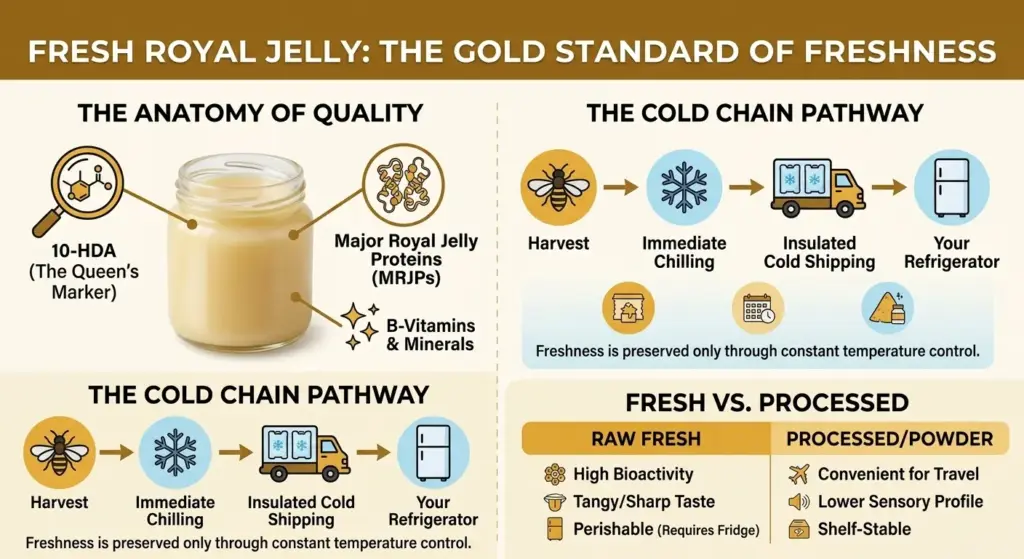
Royal jelly is a complex mix: water, proteins (including major royal jelly proteins), sugars, fatty acids, vitamins, and trace minerals. One compound people watch closely is 10-HDA (10-hydroxy-2-decenoic acid), a fatty acid strongly associated with royal jelly authenticity and quality testing. You’ll see brands highlight 10-HDA percentages because it’s measurable—and measurability is rare in the supplement world. This doesn’t mean higher is always “better” for every person, but it’s a useful baseline when comparing jars.
Difference Between Fresh and Processed Royal Jelly
Processed royal jelly is usually freeze-dried (powder/capsules), blended into honey, or stabilized in ways that improve shelf life. That convenience is real—though the tradeoff is you’re no longer getting the same “straight from cold storage” experience. Fresh product tends to be more flavor-forward and time-sensitive; processed formats tend to be easier for travel and dosing consistency. If your goal is a truly raw-feeling experience, fresh royal jelly made in USA often aligns better with that preference, assuming it’s shipped and stored correctly.
Don’t decide based on price per jar—decide based on storage and shipping. If the listing can’t explain how the royal jelly stays cold from producer to you, the savings can turn into a useless purchase.
Cold-chain shipping preserves bioactives; shelf storage destroys potency.

Why Choose Fresh Royal Jelly Made in USA?
Country-of-origin isn’t a moral badge; it’s a practical filter. USA-sourced royal jelly shortens transit; shorter transit preserves freshness. When you buy domestically produced royal jelly, you usually get shorter transit times, clearer accountability, and fewer handoffs where temperature control can fail. Here’s how “made in USA” connects to quality, local beekeepers, and sustainability in plain, non-hype terms.
Quality Standards and Regulations
For royal jelly, quality often comes down to testing and handling. One widely used reference for composition and test methods is ISO 12824:2016, which describes specifications and analytical approaches for royal jelly quality and safety, including 10-HDA measurement. Even when a brand isn’t formally “certified” to a standard, you can still ask for a recent COA (certificate of analysis) showing 10-HDA and basic purity checks. The best sellers don’t get defensive—they just send it.
“International standards are powerful tools for ensuring the quality, safety and efficiency of products and services…” — ISO (International Organization for Standardization).
10-HDA percentages verify authenticity; marketing claims verify nothing.
Supporting Local Beekeepers
Buying fresh royal jelly made in USA can put your dollars closer to the people doing the labor-intensive part: raising queens, managing colonies, and harvesting on tight schedules. Most people don’t realize how hands-on royal jelly production is compared with honey. If you can buy direct (or at least from a brand that names its apiaries), you’re more likely to get transparent batch info and better cold-chain discipline.
Environmental Impact and Sustainability
Sustainability gets messy fast. Still, shorter shipping distances often mean fewer days in transit and fewer temperature swings—both help a cold product. And when a producer is local, you can ask about practical things: pesticide exposure, forage areas, and how they manage colony health. That kind of conversation is hard when the supply chain is opaque. In practice, domestic sourcing can make accountability feel less like a slogan and more like a phone call.
- Shorter transit times: Less time unrefrigerated can preserve sensory quality.
- Clearer traceability: You can request batch dates, harvest windows, and lab documents.
- Fewer middlemen: Each handoff is a chance for warm storage or relabeling.
- Local incentives: Producers selling nearby can’t hide behind distance if quality slips.
The Benefits of Raw Pure Royal Jelly
People buy royal jelly for lots of reasons—energy, skin, “overall vitality”—and you’ll see claims go wild online. Here’s a steadier way to think about benefits: what research suggests, what’s plausible, and what’s just marketing noise. We’ll keep it practical, not mystical.
Quick overview of fresh royal jelly made in USA benefits and risks. What you need to know before adding cold-stored royal jelly to your daily wellness routine.
Health Benefits of Pure Royal Jelly
Pure royal jelly is studied for antioxidant, anti-inflammatory, and metabolic effects, but results differ by population, dose, and product form. Some clinical research exists, yet it’s not a magic wand—and it’s not a substitute for medical care. What it can be, for some people, is a “small nudge” supplement that supports routine consistency (sleep, training, nutrition) rather than replacing it. A randomized, double-blind placebo-controlled study registered in 2022 and published in 2025 reported changes in oxidative stress markers and physical activity measures in people with multiple sclerosis after royal jelly supplementation (PubMed-indexed clinical study, 2025).
Skin and Beauty Benefits
Topical and oral use both show up in beauty conversations, but they’re not the same. Topical formulas may use royal jelly extracts for conditioning and barrier support, while oral use is usually framed around internal antioxidant activity. If you’re chasing “glow,” start by being honest about basics: hydration, sunscreen, and protein intake beat any trendy add-on. Raw products can feel more “alive” to users—though that’s a personal experience, not a guarantee.
Boosting Immunity and Energy Levels
Some users describe steadier morning energy or fewer “draggy” days, especially when they take it consistently and keep the dose modest. The catch: if you’re sensitive to bee products, you might feel the opposite (stomach upset, itching, respiratory symptoms). Start low, watch your body, and don’t stack five new supplements at once—you won’t know what did what. If you want the cleanest “baseline,” raw pure royal jelly in a simple refrigerated format is usually easier to evaluate than a honey blend with extra botanicals.
Change one variable at a time. If you start royal jelly, don’t also change caffeine, probiotics, and a new skincare routine that same week—your feedback loop will be useless.
How to Identify Pure and Raw Royal Jelly
This is the part people wish they’d read first: how to spot the difference between a clean jar of royal jelly and something that’s been diluted, overheated, or disguised in honey. You don’t need lab equipment to avoid most duds—you need a checklist, a willingness to ask for documents, and a little skepticism.
Key Characteristics of Pure Royal Jelly
Pure royal jelly has a recognizable sensory profile: creamy, pale (often off-white to light yellow), and tangy with a slightly sharp finish. It’s not supposed to taste like candy. Labels that say “royal jelly in honey” can be fine, but they’re not the same as pure product. And if a brand never mentions refrigeration for “fresh” royal jelly, pause and ask why.
Fresh royal jelly tastes tangy; sweet royal jelly signals dilution.
- Refrigeration language: “Keep refrigerated” or “ship cold” is a good sign for fresh formats.
- Single-ingredient clarity: Look for royal jelly as the only ingredient when you want purity.
- Batch details: Harvest date, lot number, and best-by that isn’t absurdly long.
- Taste honesty: Tangy and acidic is normal; cloyingly sweet is a hint of blending.
Signs of High-Quality Raw Pure Royal Jelly
High-quality raw pure royal jelly usually comes with proof—most often a COA showing 10-HDA, plus basic microbiology or contaminant screening depending on the producer. For authenticity, 10-HDA is a commonly discussed marker, and ISO 12824:2016 is frequently referenced in quality conversations around test methods and specs. If you’re comparing options, ask for the most recent lab report and check whether the test date is current and tied to the lot you’re buying.
Avoiding Adulterated Products
Adulteration can look boring: sugar syrups, honey-heavy blends, or labels that imply “fresh” while the product ships warm. Don’t be shy about asking direct questions—reputable sellers expect it. Also watch for listings that use vague phrases (“premium,” “high potency”) without measurable data. A 2024 study in Microchemical Journal described analytical methods to detect contaminants (including phthalate esters) in different royal jelly product types, highlighting that testing methods can meaningfully distinguish quality and safety differences (Microchemical Journal, 2024).
- Ask for the COA by lot number. Don’t accept a generic PDF with no batch linkage; you want the report tied to what’s in your cart.
- Check 10-HDA reporting. Look for a clear percentage (or g/100 g) and a test method; absence isn’t always bad, but it removes a key comparison tool.
- Confirm cold-chain shipping. Ask how it’s packed (ice packs, insulation) and what happens if delivery is delayed.
- Read the ingredient line like a lawyer. If you want pure product, avoid “royal jelly + honey + syrup + flavors” blends.
- Start with a small jar. Your body might not tolerate bee proteins well, and freshness is easier to judge in a small batch.
Not sure if that jar is truly fresh? Use this printable checklist before you buy. It covers the 7 critical verification steps most shoppers skip—including cold-chain confirmation, 10-HDA documentation, and batch traceability. Keep it on your phone or print it for farmers market visits.
Where to Buy Fresh Royal Jelly Made in USA
Buying is where good intentions go to die—especially online, where “fresh” can mean anything. The goal is simple: find a seller who can prove origin, show testing, and ship cold. Below are the realistic places people buy, plus what to look for so you don’t end up with a warm, mystery jar.
Top Online Retailers
Online can work well if the retailer treats the product like refrigerated food. Look for listings that clearly state “ships with ice packs,” show a lot number, and offer a COA on request. On pureroyaljelly.com, internal education pages (like storage guides or “what is 10-HDA” explainers) should be easy to find—because shoppers need those answers before checkout. If you’re building internal links, use anchor text that mirrors what buyers ask for: pure royal jelly and raw pure royal jelly.
Local Stores and Farmers Markets
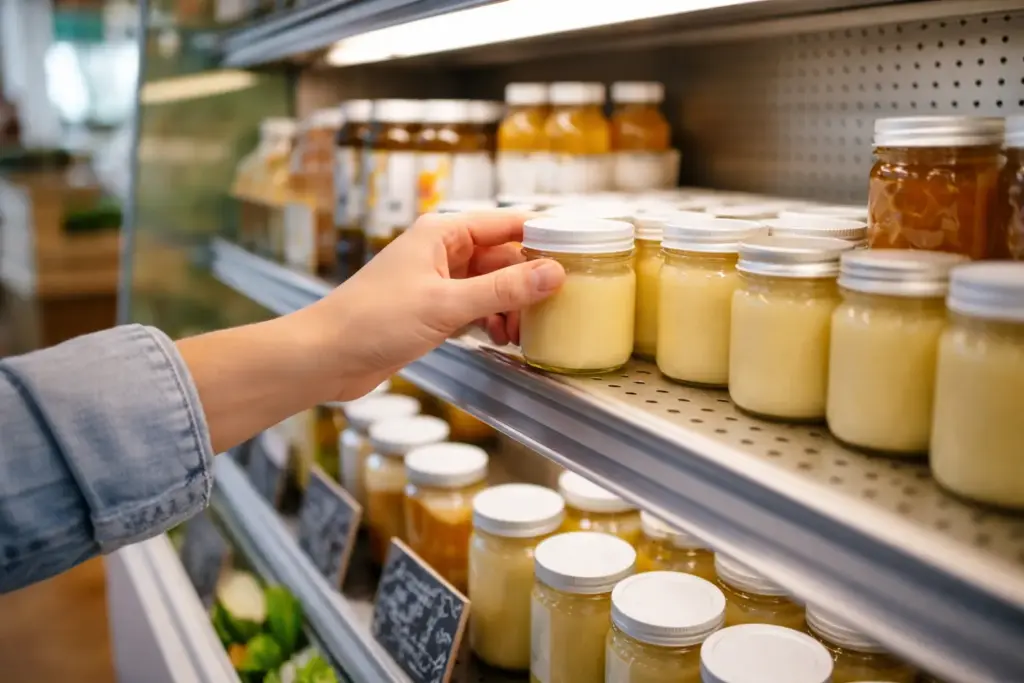
Local is underrated. At a farmers market, you can ask: “When was this harvested?” and watch the seller’s face. You can also inspect the jar (color, separation, smell) and learn how they store it. The downside is inventory is limited and consistency varies—one producer may be meticulous, another may be casual about refrigeration. If you find a good one, stick with them.
- Ask about storage at the stall: A cooler with ice isn’t fancy, but it’s a green flag.
- Ask for harvest timing: Even a rough month/year shows they track production.
- Check for lot labeling: Handmade doesn’t have to mean untracked.
- Smell and texture check: You’ll often spot problems before you spend money.
Direct from Beekeepers
This is often the cleanest route for fresh royal jelly made in USA, because you can ask about harvest practices, freezer storage, and whether they test batches. You also skip the “warehouse mystery.” The tradeoff is you may need to plan around harvest windows and shipping days (nobody wants a refrigerated jar stuck in a weekend delay). If you’re serious, buy direct and build a relationship—repeat buyers usually get the best info.
“There are two ways to be fooled. One is to believe what isn’t true; the other is to refuse to believe what is true.”— Søren Kierkegaard, Philosopher and Author
Incorporating Fresh Royal Jelly Into Your Routine
Royal jelly routines can get weird fast—people jump from zero to huge doses, then blame the product when they feel off. A calmer approach works better: small amounts, consistent timing, and a plan for storage. This section covers dosage norms, easy ways to take it, and the allergy precautions people often skip.
Daily Dosage Recommendations
Typical supplemental doses vary widely by product form (fresh vs capsules) and by the reason you’re taking it. Many people start with a small “pea-sized” amount of fresh royal jelly and adjust based on how they feel over 1–2 weeks. If you’re using fresh royal jelly made in USA that’s potent and truly raw, you often don’t need a large amount to assess tolerance. If you have asthma, severe allergies, or a history of reactions to bee products, talk to a clinician before experimenting.
Creative Ways to Consume Royal Jelly
Fresh royal jelly is tart, so pairing matters. Some people take it sublingually for a short time; others mix it into a small spoon of yogurt or blend it into a cool smoothie (not hot tea—heat is the enemy). If you’re aiming for a consistent habit, keep the steps frictionless: jar in the fridge door, clean spoon, same time daily. And yes, it’s fine to keep it simple—no need to turn breakfast into a chemistry lab.
- Sublingual “hold”: A short hold under the tongue can reduce taste shock for some people.
- Cold yogurt mix: Helps with tang and makes dosing repeatable.
- Honey chaser: Use a tiny amount of honey after, not blended in, so you still know what you’re taking.
- Cool smoothie add-in: Add after blending so it doesn’t warm up from the motor heat.
Precautions and Allergies
Royal jelly can trigger allergic reactions in some people—sometimes severe. This is not fearmongering; it’s documented. The Food and Agriculture Organization (FAO) of the UN advises caution: ‘Allergic reactions…as a result of contact or injection, may occur. As with all other potential allergenic substances, small quantities should be tried for a few days before using full doses. In case of allergic reactions, its use should be suspended immediately. (FAO, 1996, updated reprint) If you’ve reacted to bee stings, honeycomb, or pollen, be extra cautious. Start with a tiny amount, and stop immediately if you notice wheezing, hives, swelling, or throat tightness.
Small-dose royal jelly tests tolerance; full-dose royal jelly risks reaction.
If you have asthma or a history of severe allergies, treat royal jelly like a serious new food—not a casual “wellness shot.” Start tiny, don’t take it alone the first time, and have a plan if symptoms show up.

Customer Reviews and Testimonials
Reviews are messy, but they’re still useful when you read them the right way. Instead of hunting for miracles, look for patterns: shipping temperature, taste consistency, customer support, and whether the jar matches the COA. This section shares the kinds of stories people report, how to compare brands without getting tricked, and what experts tend to say about claims.
Success Stories from Royal Jelly Users
Many positive testimonials cluster around “steady energy,” “better mornings,” and “skin feels calmer.” Those are subjective, but they’re not meaningless—especially when dozens of buyers report the same practical detail, like “arrived cold” or “tangy, not sweet.” When you see success stories, check what product they used: fresh royal jelly made in USA stored cold is a very different experience from a shelf-stable honey blend. Your mileage may vary, but the format matters.
Comparative Analysis of Different Brands
When comparing brands, don’t get hypnotized by marketing copy. Use hard checkpoints: origin, shipping method, COA availability, and whether they disclose 10-HDA. If you want a fast comparison, here’s a simple way to evaluate a “fresh” option against a more processed one.
The table below is designed for real shopping decisions—quick, imperfect, but grounded in what you can verify.
| Temperature sensitivity | High; needs cold-chain handling | Lower; generally more shelf-stable |
| Ability to assess “freshness” | Higher; taste/texture are informative | Lower; harder to judge after processing |
| Convenience | Moderate; needs fridge/freezer planning | High; travel-friendly |
| Label clarity | Often single-ingredient | Often multi-ingredient |
| Comparability via testing | Good if COA shows 10-HDA and lot info | Varies; powders may standardize, blends often don’t |
If your priority is “most like the raw product,” refrigerated tends to win—assuming it’s truly kept cold end-to-end.
Expert Opinions on Royal Jelly Benefits
Experts tend to be cautious: royal jelly is promising, but not proven for every claim floating around social media. A 2024 systematic review indexed on PubMed (covering research up to 2024) summarized royal jelly’s bioactive components and potential health effects, while also highlighting the need for stronger, consistent human trials (peer-reviewed systematic review, 2024). That’s the mature stance: interesting, plausible mechanisms, uneven human evidence. So use it like a supplement—supportive, not heroic.
FAQ
What is fresh royal jelly made in USA?
It’s royal jelly harvested by U.S. beekeepers and sold in a refrigerated (or frozen) format to preserve freshness. The key is cold handling from harvest to delivery, not just the words on the label.
How to store raw pure royal jelly at home?
Keep it refrigerated right after opening, and use a clean, dry utensil each time. If you won’t finish it quickly, freezing can help preserve quality—just minimize repeated thawing and refreezing.
Is it safe to take pure royal jelly every day?
Yes, for many people it’s tolerated in small daily amounts, but allergies are the big exception. If you have asthma, severe allergies, or you’ve reacted to bee products before, talk to a clinician and start with a tiny test amount.
Fresh royal jelly vs capsules: which is better?
It depends on your goal. Fresh royal jelly is closer to the raw food-like experience, while capsules are easier for travel and consistent dosing; neither automatically guarantees higher quality without testing and trustworthy sourcing.
Where to buy fresh royal jelly made in USA?
Look for direct-from-beekeeper options, reputable refrigerated online sellers with COAs, or trusted local farmers markets where you can confirm cold storage. Prioritize sellers who can show a lot-specific lab report and explain shipping temperature control.
Perishable royal jelly signals potency; shelf-stable royal jelly signals processing.
Curious what you care about most—taste, lab testing, or cold shipping reliability? Share your “non-negotiable” for buying fresh royal jelly made in USA, and why.
Sources
- Royal jelly a promising therapeutic intervention and functional food supplement: A systematic review (2024), Pharmaceuticals
- Distribution and risk assessment of phthalate esters in different types of royal jelly products (2024), Microchemical Journal
- Value-added products from beekeeping. Chapter 6 (1996, updated reprint), Food and Agriculture Organization (FAO)
- ISO 12824:2016 Royal Jelly — Specifications, International Organization for Standardization