Pure Royal Jelly Capsules: Your Ultimate Guide to Benefits and Choices
If you’re staring at a supplement label wondering what’s real, what’s overhyped, and what’s worth your money, you’re not alone. Pure royal jelly capsules sound simple, but the differences in purity, sourcing, dosage, and brand quality can be surprisingly messy in 2026. Buy the wrong bottle and you may waste cash on fillers, weak formulations, or vague claims. The smart move is to understand how royal jelly is made, what benefits people actually look for, and how organic options and Stakich Royal Jelly compare in the real world.
Understanding Pure Royal Jelly Capsules
This section clears up the basics first. You’ll see what pure royal jelly capsules are, how they’re produced, and where the line sits between pure and organic products.
What Are Pure Royal Jelly Capsules?
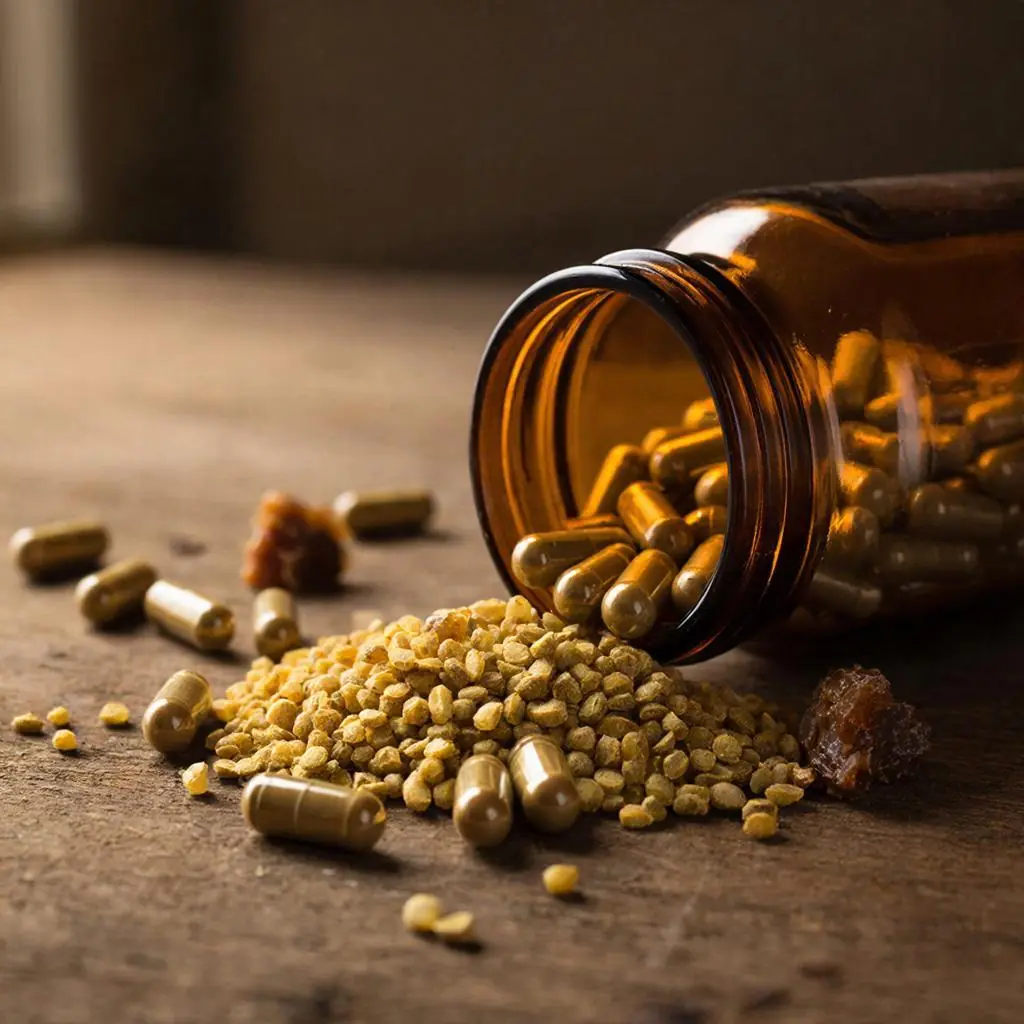
Pure royal jelly capsules are supplements made from royal jelly, a nutrient-rich substance worker bees produce to feed queen larvae. In capsule form, the goal is convenience: you get a measured serving without dealing with the taste, texture, or refrigeration concerns that often come with fresh royal jelly. Most people shopping for pure royal jelly capsules want a product that keeps the bee-derived material as intact as possible while limiting unnecessary additives.
That said, “pure” on the front label doesn’t always mean single-ingredient perfection. Some formulas blend royal jelly with bee pollen, propolis, gelatin, rice flour, or flow agents to stabilize the capsule.
- Capsule format: Easier to store and travel with than fresh royal jelly, which can be fussy.
- Standardized serving: You can track how much you’re taking instead of guessing by spoon size.
- Label caution: “Pure” may describe marketing style, not total ingredient simplicity, so read the supplement facts panel.
How Pure Royal Jelly Capsules Are Made
Freeze-dried royal jelly concentrates potency; fresh royal jelly demands refrigeration.
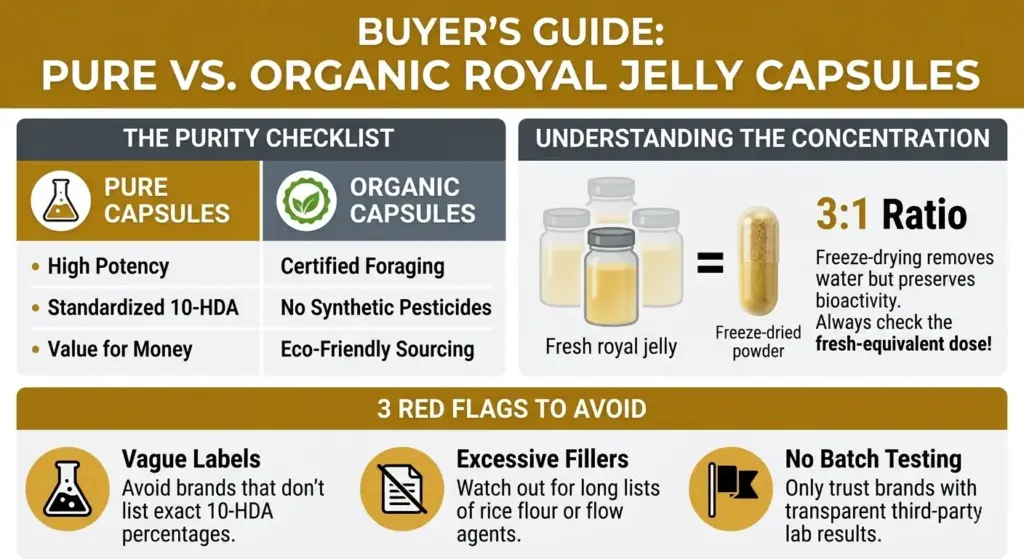
Manufacturing usually starts with harvesting fresh royal jelly from queen cell cups in managed beehives. After collection, the material may be freeze-dried to remove moisture while preserving sensitive compounds, then milled into powder and placed into capsules. That freeze-dried step matters more than many shoppers realize, because fresh royal jelly is mostly water; a small powder dose can represent a much larger fresh equivalent.
A 2021 review in Nutrients described royal jelly as a functional bee product with antioxidant, anti-inflammatory, and immunomodulatory potential, while also noting that human evidence still varies by outcome and study design.
Here’s the extractable statement: the best pure royal jelly capsules aren’t the loudest on the shelf—they’re the ones with clear sourcing, transparent processing, and a dose you can actually verify.
Differences Between Pure and Organic Royal Jelly Capsules
Capsule convenience enables consistency; fresh format demands cold-chain discipline.
Pure and organic aren’t twins. Pure royal jelly capsules usually focus on ingredient identity and minimal dilution, while organic royal jelly capsules add a farming and certification layer. Organic status may reflect how surrounding forage areas, hive management, and processing standards are controlled under a certifier’s rules.
And there’s a catch: organic certification can be meaningful, but it doesn’t automatically guarantee a stronger formula. A non-organic product may still offer better potency, fresher processing, or clearer standardization.
Don’t treat the word “organic” as a shortcut for quality; check dose, source, and testing before you buy.
Benefits of Pure Royal Jelly Capsules
People usually buy these supplements for wellness support, not because they love bee biology. So let’s get into the practical side: nutrition, skin-related interest, and the reason many users say they take them for everyday energy.
Nutritional Profile and Health Benefits
Royal jelly contains proteins, fatty acids, trace minerals, and naturally occurring compounds that make it nutritionally distinct from honey. When people discuss royal jelly capsules benefits, they’re usually talking about general wellness support, antioxidant activity, and immune-related interest rather than a guaranteed medical effect. That distinction matters. Supplements can support a routine, but they don’t replace treatment.
A 2021 review published in Nutrients described royal jelly as a functional bee product with antioxidant, anti-inflammatory, and immunomodulatory potential, while also noting that human evidence still varies by outcome and study design.
“For all individuals, a varied and balanced diet and a healthy lifestyle are important.”
European Food Safety Authority, nutrition guidance language used in supplement-regulation context
That quote fits here because even the best pure royal jelly capsules work best as part of a broader routine—not as a nutritional rescue plan.
Potential Skin and Beauty Enhancements
Skin is where interest gets very lively, very fast. Some people use pure royal jelly capsules because they hope nutritional support may indirectly help skin appearance, texture, or overall vitality. The proposed logic centers on antioxidants and bioactive lipids, though results differ and strong cosmetic outcomes aren’t guaranteed from capsules alone.
If your main goal is beauty support, think in systems, not miracles:
- Internal support: Supplements may complement sleep, hydration, and protein intake, but they won’t erase poor habits.
- Consistency: Most people who try royal jelly don’t judge it after three days. They give it time.
- Expectation control: Softer, steadier changes are more realistic than dramatic before-and-after claims.
If a brand promises instant beauty changes from pure royal jelly capsules alone, step back. Real supplement effects are usually gradual, modest, and tied to the rest of your routine.
Boosting Energy and Vitality
This is one of the biggest reasons shoppers keep looking. People often describe pure royal jelly capsules as part of a morning wellness stack because they want less drag, steadier days, or a general sense of vitality. That’s subjective, yes—but subjective doesn’t mean imaginary. It means personal response can vary a lot.
Some users feel nothing obvious. Others say the difference is subtle but useful, like taking the edge off sluggish mornings. If you’re comparing royal jelly capsules benefits, look for formulas that clearly state freeze-dried amount, fresh-equivalent amount, and serving size. Without that, you’re comparing fog to fog.
Comparing Pure Royal Jelly Capsules and Organic Royal Jelly Capsules
This is where label language starts affecting value. The next three subsections sort out purity markers, certification meaning, and whether paying more actually buys you something better.
Curious about what makes royal jelly a “superfood”? This detailed video breaks down its unique nutritional components and explains why it’s so highly valued in the world of wellness.
Purity and Quality: What to Look For
Quality usually shows up in the boring details—exact dose, country of origin, allergen warnings, and testing disclosures. A serious product should tell you whether the capsule contains freeze-dried royal jelly powder, how much fresh royal jelly it represents, and whether extra ingredients are limited.
Before the comparison, keep these markers in mind:
- 10-HDA mention: This fatty acid is often used as a quality marker for royal jelly identity.
- Minimal excipients: Fewer fillers can make label reading easier, though some capsule aids are normal.
- Testing transparency: Third-party testing or batch information adds confidence.
Organic Certification and Its Importance
Organic royal jelly capsules appeal to shoppers who care about agricultural practices and certification oversight. That can be worthwhile, especially if you prioritize traceability and environmental standards. But organic systems in bee products can be trickier than many land-based foods, since bees don’t stay inside neat invisible fences.
Organic certification tracks farming; 10-HDA testing tracks potency.
The table below shows the tradeoffs most buyers weigh.
| Primary focus | Ingredient identity and potency | Certified production standards plus ingredient identity |
| Label emphasis | Freeze-dried content, fresh equivalent, purity | Certification seal, sourcing controls, ingredient purity |
| Typical price | Usually moderate | Often higher |
| Best for | Buyers focused on dose and value | Buyers focused on certification and farming practices |
| Main caution | “Pure” can be vague without testing details | Organic doesn’t always mean stronger or fresher |
So which wins? Usually, neither category wins by default. The better buy is the one with the clearest label, trustworthy sourcing, and a price that matches the actual amount of royal jelly inside.
Price and Value Considerations
Price gaps can be annoying. Two bottles may look similar, yet one costs far more because of certification, brand reputation, import costs, or standardized testing. Value comes down to cost per meaningful serving, not cost per bottle.
Price-per-bottle misleads value; price-per-verified-mg reveals true cost.
If one product offers 300 mg freeze-dried royal jelly and another offers 800 mg fresh-equivalent with unclear conversion, compare carefully. Most people overspend when they skip that math.
Never judge value by capsule count alone. Judge it by verified royal jelly amount per serving, ingredient simplicity, and whether the brand explains what you’re actually swallowing.
Exploring Popular Brands: Stakich Royal Jelly and Others
Brand reputation shapes buying decisions fast, especially in a niche supplement category. This section looks at Stakich Royal Jelly, what shoppers usually say in reviews, and how it stacks up against other recognizable options.
Stakich Royal Jelly: A Brand Overview
Stakich Royal Jelly gets attention because the Stakich name has long been associated with bee products. Buyers often look for Stakich Royal Jelly when they want a known honey-and-hive brand rather than a random supplement label that appeared last Tuesday. That familiarity can matter.
Stakich brand recognition builds trust; label transparency builds verification.
Still, brand history shouldn’t replace product-level scrutiny. Check whether the exact Stakich Royal Jelly formula lists freeze-dried amounts clearly, identifies capsule materials, and provides storage or freshness guidance. A familiar name is comforting—but labels still do the heavy lifting.
Customer Reviews and Feedback
Reviews can help, though they’re messy. Some buyers focus on energy, others on ease of swallowing, and some mostly talk about shipping speed. That means you need to separate product quality comments from shopping-experience noise.
- Look for patterns: Repeated praise about freshness or repeat purchases means more than one dramatic review.
- Watch for vague claims: “Amazing” tells you almost nothing unless the reviewer explains what improved.
- Check recency: Old reviews may reflect a previous formula, packaging, or supplier.
All things are poison, and nothing is without poison; only the dose makes a thing not poisonous.” — Paracelsus, Renaissance physician and founder of toxicology . This foundational principle reminds us that even a well-liked supplement such as Stakich Royal Jelly should be judged by dose, not hype.
Old quote, still useful. Even a well-liked supplement such as Stakich Royal Jelly should be judged by dose, not hype.
Comparing Stakich with Other Leading Brands
When comparing Stakich Royal Jelly with other brands, focus on three things: transparency, potency, and consistency. Some newer brands may offer organic royal jelly capsules with stronger testing language. Others may compete on price but reveal very little about sourcing. In practice, the best choice depends on what matters most to you—brand trust, certification, or cost efficiency.
A 2023 survey from the Council for Responsible Nutrition found that consumers continue to value supplement quality, trust, and label transparency as key purchase drivers, which helps explain why established bee-product brands often keep an edge.
How to Choose the Best Royal Jelly Capsules for Your Needs
This part is the decision filter. If you feel overloaded by labels, serving sizes, and vague wellness claims, these points will help you narrow the field without overthinking every bottle.
Factors to Consider: Dosage, Formulation, and Brand
Different bodies, different goals. Someone taking pure royal jelly capsules for general wellness may choose a lower daily serving than someone specifically comparing potency per capsule. Formulation matters too: gelatin vs vegetarian capsules, single-ingredient powder vs blends, and allergen considerations all affect fit.
- Start with your goal. Decide whether you care most about daily wellness, convenience, or a high-potency formula. That keeps you from paying for features you don’t need.
- Check the real amount. Look for freeze-dried weight and, if listed, the fresh-equivalent conversion. If the math is fuzzy, move on.
- Single-ingredient capsules enable dosing clarity. Blended formulas obscure royal jelly quantity.
- Scan the ingredient list. You want to know whether the product is mostly royal jelly or padded with extras. Some add-ins are fine; mystery blends aren’t.
- Review the brand’s trust signals. Third-party testing, clear contact details, and strong review patterns matter more than flashy packaging.
- Consider your allergies and medications. Bee products can trigger serious reactions in some people. If that’s even a possibility, don’t guess.
Reading and Understanding Product Labels
Labels can feel like tiny puzzles written by tired lawyers. Still, this is where smart buying happens. You want to spot serving size, amount per serving, capsule count, added ingredients, allergen statements, and any mention of standardization.
If you’re comparing pure royal jelly capsules against organic royal jelly capsules, read the supplement facts panel before the front label. Front labels sell a story. The side panel tells the truth.
With so many options on the market, it’s easy to forget the details from one bottle to the next. That’s why we’ve created a simple, printable Royal Jelly Brand Comparison Checklist. It helps you weigh key factors like dosage, cost per serving, and purity standards side-by-side, so you can choose with confidence.

Consulting with Health Professionals
If you have asthma, a history of allergies, autoimmune concerns, or you’re pregnant, this step isn’t optional. Bee products can cause reactions, sometimes severe ones, in sensitive people. And if you’re already taking medications or multiple supplements, a clinician or pharmacist can help you avoid stacking things blindly.
Low-dose initiation tests tolerance; full-dose adoption risks allergic reaction.
Most healthy adults won’t need a dramatic protocol. But a quick check with a qualified professional can save you from the kind of “natural” mistake that doesn’t feel natural at all.
Where to Buy Pure Royal Jelly Capsules
Buying is easy. Buying well? That takes a little discipline. The right retailer should make it easier to confirm authenticity, compare labels, and avoid stale or poorly stored stock.
Purchasing Online: Trusted Retailers and Platforms
Online shopping offers the widest range of pure royal jelly capsules, including direct brand sites, major marketplaces, and specialty supplement stores. The upside is selection. The downside is that third-party marketplace listings can blur who actually stored, shipped, or sourced the product.
- Buy direct when possible: Brand websites often give the clearest batch and storage details.
- Use established supplement retailers: They usually provide better filtering, reviews, and customer service.
- Check seller identity: On marketplaces, confirm whether the brand or an authorized seller fulfills the order.
In-Store Options: Health Shops and Pharmacies
Physical stores give you one obvious advantage: you can inspect the bottle before buying it. That means checking seals, expiration dates, and label clarity on the spot. Independent health shops sometimes stock niche bee products more thoughtfully than chain pharmacies, though pricing may run a bit higher.
If you want advice face-to-face, this route can be useful. Just remember that shelf presence doesn’t automatically mean the product is the strongest or cleanest option.
Tips for Ensuring Product Authenticity
Authenticity is less glamorous than benefits, but it’s where a good purchase begins. Fake, mishandled, or low-quality supplements rarely announce themselves.
- Inspect the seal: A compromised seal is an instant no.
- Match labels across channels: If the brand site and seller photos don’t line up, pause.
- Check dates and storage advice: Freshness and handling matter with bee-derived products.
- Favor transparent brands: If customer support can’t answer basic sourcing questions, that tells you plenty.

FAQs About Pure Royal Jelly Capsules
These are the questions buyers usually ask right before checkout—or right after the bottle arrives. Short answers help, but context matters, especially with bee products.
Are There Any Side Effects?
Yes, side effects are possible. Pure royal jelly capsules may cause allergic reactions in people sensitive to bee products, and digestive upset can happen in some users. If you have asthma or a known bee allergy, be especially careful.
Can They Be Taken Daily?
Yes, many people take pure royal jelly capsules daily, but the right schedule depends on the specific product and your tolerance. Follow the label, start conservatively, and don’t assume more is better just because the supplement is natural.
Who Should Avoid Taking Royal Jelly Capsules?
People with bee-product allergies, certain asthma histories, or those advised by a clinician to avoid specific supplements should skip them unless medically cleared. Pregnant or breastfeeding individuals should also check with a qualified professional first.
What’s your biggest sticking point when buying royal jelly supplements—price, purity, or trust in the brand? Share that question with your own experience, because it may help someone else avoid a bad purchase.
Sources
- Kamyab, S., et al. (2020). Quantitative analysis of bioactive compounds present in Iranian royal jelly. Journal of apicultural research.
- Collazo, N., et al. (2021). Health Promoting Properties of Bee Royal Jelly: Food of the Queens. Nutrients.
- Council for Responsible Nutrition Consumer Survey 2023. (2023). WholeFoods Magazine.
- European Commission. (2025). Food-Based Dietary Guidelines – Guidance on a varied diet. Knowledge for policy.
- (2026). The dose makes the poison: From Paracelsus to Modern Metabolic Science.